Miracles in Canonization 1588 to the present
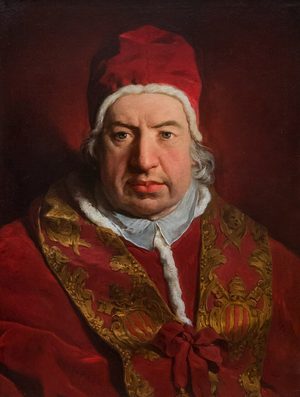

The Catholic Church asks that a miracle, in practice nearly always a medical healing, be examined and approved before a candidate is beatified and again before canonization. The method took shape under Sixtus V in 1588 and in the writings of Prospero Lambertini, later Benedict XIV, and was revised in 1983 and 2016. Other traditions answer it differently: the Orthodox glorify saints without requiring a miracle, and the Protestant churches have no canonization.
| Date | Congregation of Rites founded 22 January 1588; Lambertini's treatise 1734–1738; present norms 1983; medical board regulations published 23 September 2016 |
|---|---|
| Place | Rome (Dicastery for the Causes of Saints); the first inquiry is held in the candidate's own diocese |
| Claimed by | The Catholic Church, through the Dicastery for the Causes of Saints |
| Type | A healing attributed to the intercession of a candidate for sainthood |
| Official status | A miracle is required for beatification (not for a martyr) and a second for canonization; the pope may waive these requirements |
| Investigations | Diocesan inquiry; two preliminary medical examiners; the Medical Board; theologians; cardinals and bishops; the pope's decree |
What the Church claims
The Catholic Church holds that saints in heaven pray for the living (praying to saints) and that God may grant a healing as a sign through such prayer. Its norms require a miracle of this kind for the beatification of a confessor, and a second, occurring after beatification, for canonization. A martyr is beatified without one but needs one for canonization. The U.S. bishops' conference adds that a pope may waive these requirements. A 2006 letter of Benedict XVI to the Congregation states that the practice of the Church requires a physical miracle, not a moral one.
The case is brought by the cause's postulator, who guides it and prepares a summary (positio) of the alleged miracle, separate from the summary of the candidate's virtues (USCCB). The Church does not claim that every unexplained recovery is a miracle. It claims that a recovery which medical experts cannot explain, and which followed prayer to the candidate, may be recognized by the pope as one.
History of the procedure
For centuries saints were proclaimed by local acclaim. Urban VIII required Rome's involvement in all causes in 1634. Sixtus V's constitution Immensa aeterni Dei (22 January 1588) created the Congregation of Sacred Rites and gave it the causes of saints (vatican.va).
Prospero Lambertini was Promoter of the Faith, the official who raised difficulties against each cause, from 1708 to 1728. In 1726 he refused to accept five cures in the cause of Peter Fourier, arguing that sudden recoveries could also be produced by angels, which led him to a longer reflection on what a miracle is (Laverda, Church History, 2021). That reflection fills Book IV of De servorum Dei beatificatione et beatorum canonizatione (Bologna, 1734–1738; revised 1743 and 1747–1751). As Pope Benedict XIV (from 1740) he created, in 1743, the first register of medical experts for causes. Pius XII set up a Medical Commission in 1948, and John XXIII merged the bodies into a single Medical Board on 10 July 1959 (Aleteia, 2016).
John Paul II's apostolic constitution Divinus Perfectionis Magister (25 January 1983) reformed the procedure: the inquiry into miracles is conducted separately from the inquiry into virtues or martyrdom, and a Promoter of the Faith presides over the theologians' meeting. Pope Francis's Maiorem hac dilectionem (11 July 2017) added "offering of life" as a ground for beatification, which also requires a miracle.
Investigations and objections
A healing is first studied by two preliminary medical examiners and then by the Medical Board, whose conclusions go before theologians and then before cardinals and bishops. The regulations published on 23 September 2016 require a qualified majority of the board (at least five of seven experts, or four of six), allow a case to be re-examined no more than three times, and require confidentiality, especially for minors (Aleteia, 2016). A summary by the Federation of Catholic Medical Associations lists conditions it traces to Lambertini: a serious disease with an unfavorable prognosis, a known and organic disease, no treatment interfering with the healing, a sudden cure, restoration of all vital functions, and a lasting cure. It reports that of about 7,000 healings submitted to the Medical Office over 150 years, 66 were declared miraculous (FIAMC).
Critics have disputed particular cases. In the cause of Mother Teresa, a woman in West Bengal said that on 5 September 1998 a medal blessed by Mother Teresa was placed on her abdomen and that a lump was gone by the next morning. Church authorities in Calcutta held an inquiry from November 1999 to August 2001, John Paul II attributed the miracle to Mother Teresa in December 2002, and she was beatified on 19 October 2003. A former West Bengal health minister said the woman had recovered through medicine at Balurghat Hospital, and Indian rationalist groups objected; the woman rejected these doubts (AFP, in Taipei Times, 2003). Of John Paul II's causes, the recovery of a French nun from Parkinson's disease was approved for his beatification on 1 May 2011, and that of a Costa Rican woman from a brain aneurysm for his canonization on 27 April 2014 (Magis Center; Tico Times).
Official status
The Catechism teaches that canonization recognizes the "power of the Spirit of holiness" in the Church and proposes the saints as models and intercessors (CCC 828). A 1998 doctrinal commentary of the Congregation for the Doctrine of the Faith lists canonizations among truths to be held definitively, though not as divinely revealed.
The Orthodox Church requires no miracle for glorification, as the readings below show. For how the Protestant churches treat healing and miraculous gifts, see spiritual gifts and healing.
Where each church stands
- Catholic:
The Catholic Church requires an examined miracle for beatification (except of martyrs) and for canonization, under Divinus Perfectionis Magister (1983) and the 2016 Medical Board regulations. The Catechism (828) says that by canonizing some of the faithful the Church recognizes "the power of the Spirit of holiness within her." A 1998 commentary of the Congregation for the Doctrine of the Faith places canonizations among truths held definitively.
- Orthodox:
The Orthodox Church requires no miracle for glorification. Fr. Joseph Frawley, writing on the Orthodox Church in America website (2000), says a miracle may start a glorification but is "not an absolute necessity"; a life of holiness and fully Orthodox writings matter most. Only God makes a saint, he writes, and after local veneration the diocesan bishop is asked, a canonization commission reports, and the Holy Synod decides. In Russia, Archpriest Georgy Mitrofanov names miracles, veneration by believers and a righteous life as grounds, and says it is "better to under-canonize than to over-canonize" (Pravmir).
- Lutheran:
The Lutheran confessions provide no process of canonization or examination of miracles. The Apology of the Augsburg Confession (Article XXI) approves honoring saints by thanks to God, by strengthening faith through their example, and by imitating their faith and virtues, but holds that Scripture gives no command, promise or example for invoking them. The Lutheran Church-Missouri Synod's Commission on Theology and Church Relations says God gives gifts "according to His good pleasure and the needs of the church," and that "the Word and the sacraments are the only means of grace" (1972).
- Reformed:
The Reformed churches have no canonization. The Westminster Confession (1.1) says God's "former ways" of revealing his will are "now ceased," and B. B. Warfield argued in Counterfeit Miracles (1918) that miracles ceased with the apostolic age, a view common among Presbyterians. The Christian Reformed Church (Synod 1973) holds instead that Christ gives "whatever gifts he judges necessary" in every age, while warning against excesses in faith healing.
- Anglican:
Article XXII of the Thirty-Nine Articles rejects "the Romish Doctrine" concerning the invocation of saints as "a fond thing vainly invented." The Church of England keeps Lesser Festivals and Commemorations of holy people on its calendar. Its Common Worship provides prayer for the sick with laying on of hands or anointing, which it says should not reject "the skills and activity of medicine," and A Time to Heal (2000), a report for the House of Bishops, reviewed the healing ministry.
- Methodist:
Methodist churches have no canonization. Wesley's Article of Religion XIV (1784), abridging Anglican Article XXII, calls the "Romish" doctrine of invocation "a fond thing, vainly invented." On miracles Wesley rejected the view that the gifts ceased because the world had become Christian: in Sermon 89 (1787) he wrote that the real cause was that "the love of many" Christians "waxed cold." The United Methodist Church's guidelines on the charismatic movement (1976) ask that tongues not "hinder worship or cause distraction for others."
- Baptist:
Baptists have no canonization and no body that tests miracles. The Second London Confession (1689) says the former ways of God's revealing his will are "now ceased" (1.1). Baptists are divided between cessationists, who hold that the sign gifts ended with the apostles, and continuationists; the Baptist Faith and Message (2000) is silent on tongues, and the Southern Baptist International Mission Board barred candidates with a private prayer language from 2005 until 2015.
Sources
- John Paul II, Divinus Perfectionis Magister (25 January 1983)
- Francis, Maiorem hac dilectionem (11 July 2017)
- Congregation for the Causes of Saints, history of the Congregation Immensa aeterni Dei, 1588; reforms of 1969 and 1983
- USCCB, Making Saints (backgrounder) miracles required; postulator; positio; Urban VIII, 1634
- Benedict XVI, Letter to the Congregation for the Causes of Saints (24 April 2006)
- Congregation for the Doctrine of the Faith, Doctrinal Commentary on the Professio fidei (1998)
- Catechism of the Catholic Church, 828
- Laverda, "Revising the Supernatural: Prospero Lambertini's Reconsideration of the Concept of Miracle," Church History (2021)
- Aleteia, "Vatican issues stricter procedures for medical examination of miracles" (25 September 2016)
- FIAMC, Cardinal Prospero Lambertini (Pope Benedict XIV)
- Taipei Times (AFP), 6 October 2003, on the Mother Teresa healing
- Magis Center, "The Miracle That Made Pope John Paul II a Canonized Saint"
- Tico Times, "Costa Rican Miracle Could Be Key to Sainthood for Pope John Paul II" (1 July 2013)
- Fr. Joseph Frawley, "The Glorification of the Saints in the Orthodox Church" (Orthodox Church in America, 2000)
- Pravmir, "On Glorification of the Saints": a talk with Archpriest Georgy Mitrofanov
- Apology of the Augsburg Confession, Article XXI
- Second London Baptist Confession (1689), chapter 1
- Wesley, Sermon 89, The More Excellent Way (1787)
- Spiritual gifts, tongues and healing (this site) Westminster Confession, CRC 1973, LCMS CTCR, Anglican healing texts, IMB actions, with their sources