Susanna Wesley 1669–1742
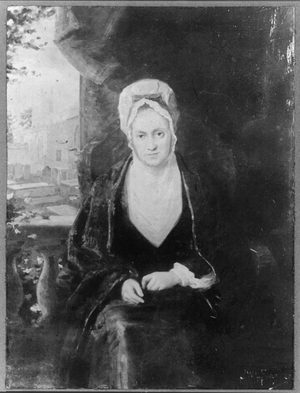

Susanna Wesley was the daughter of a Puritan minister, the wife of an Anglican rector, and the mother of John and Charles Wesley, the founders of Methodism. She left no church of her own and published no book in her lifetime, yet her method of rearing her children, her gatherings in the Epworth rectory and her letters have made her a figure that every tradition describes in its own terms, most of all the Methodist one, which calls her its "Mother."
| Lived | 20 January 1669, Spital Yard, Bishopsgate, London, to 23 July 1742, London |
|---|---|
| Church | Born into a Puritan Dissenting family; joined the Church of England in 1682 and remained in it; wife of an Anglican priest |
| Role | Wife of Samuel Wesley, rector of Epworth, Lincolnshire (the family moved there in 1697); teacher of her children; leader of Sunday gatherings in the rectory (1712) |
| Influenced by | Her father, Samuel Annesley, ejected from St Giles, Cripplegate in 1662, and the Puritan tradition he represented |
| Influenced | Her sons John and Charles Wesley, and through them the Methodist movement |
| Writings | Letters to her husband and children, including the letter on educating her family (24 July 1732); meditations and commentaries on the Apostles' Creed, the Lord's Prayer and the Ten Commandments; collected in Charles Wallace Jr., ed., Susanna Wesley: The Complete Writings (Oxford University Press, 1997) |
| Honored | Called the "Mother of Methodism"; a "Susanna Wesley Day" page on the Methodist Church in Britain's website; memorial in the forecourt of Wesley's Chapel, London, opposite her grave in Bunhill Fields |
Life
Susanna Annesley was born on 20 January 1669, the youngest daughter of Samuel Annesley, a Puritan minister who had been vicar of St Giles, Cripplegate, until the Act of Uniformity of 1662 ejected him (the Great Ejection). In 1682, aged about thirteen, she told her father that she wished to join the Church of England, and he accepted her decision. In 1688 she married Samuel Wesley, an Anglican clergyman seven years her senior, and in 1697 the family moved to Epworth, where he was rector. She bore nineteen children, of whom ten reached adulthood; John was born in 1703 and Charles in 1707. The household was poor and often in debt.
Samuel and Susanna quarreled over politics. She held that the Stuarts were the rightful monarchs and would not say "Amen" when he prayed for William III at family prayers. Samuel is reported to have said, "You and I must part; for if we have two kings, we must have two beds." Accounts give the year as 1701 or 1702, and say they were reconciled after William's death in March 1702. On 9 February 1709 the rectory burned down; the five-year-old John was taken from an upstairs window, and a new rectory was built that year.
In December 1711 Samuel went to London for the Convocation of the clergy. Susanna began Sunday evening devotions for her children, which servants and neighbors joined: forty or fifty at first, and, by her letter of 25 February 1712, two or three hundred. The curate, Godfrey Inman, and a few parishioners complained to Samuel. In her letters of 6 and 25 February she defended the meetings and asked Samuel for his "positive determination" if he wished them to end. The meetings continued until he returned.
Samuel died in 1735. In her last year Susanna lived with John at the Foundery in London, and she died there on 23 July 1742, aged seventy-three. John's Journal records her last request: "Children, as soon as I am released, sing a psalm of praise to God." She was buried on 1 August in Bunhill Fields, the Dissenters' burial ground, and John conducted the service.
What she taught
Susanna Wesley wrote no systematic theology; her teaching is found in her letters and in the way she ran her household. At John's request she set down "the principal rules I observed in educating my family" (24 July 1732). Lessons began at five. The first aim was "to conquer their will and bring them to an obedient temper," because "self-will is the root of all sin and misery" (compare original sin). Daughters as well as sons learned to read and, in some cases, Latin and Greek. A diary of 1711 gives each child a weekly evening alone with her, one child to a day.
She treated the instruction of the household as a duty of her own. Of the 1712 gatherings she wrote, "I thought it my duty to spend some part of the day in reading to and instructing my family." She described them as instruction of her family, and the question of what a woman may lawfully do in leading prayer is treated on women pastors and priests.
Her letters touch the questions that later divided Methodists from Calvinists. In 1725 she told John that Thomas à Kempis was "extremely wrong" to say that God "by an irreversible decree hath determined any man to be miserable" (predestination). In 1734 she advised him to judge his state not by feeling but by "the firm adherence of your will to God" (assurance). In 1742 she urged Charles to "Proclaim his universal love and free grace to all men." She also wrote of pressing "after greater degrees of Christian perfection."
What historians say
Charles Wallace Jr., who edited her writings (1997), describes in her a "Puritan self-understanding that ultimately values the individual" and argues that the methodical upbringing she gave her children shaped the disciplined movement John later led. Robert Moore (1974) held that John's style as a "Methodist" was formed in childhood. Patrick Oden (Wesleyan Theological Journal, 2013) answers that the older view, that her child-rearing produced John's performance-driven faith, is inadequate. Wallace sets her rule that children be taught "to fear the rod and cry softly" against her Puritan roots and the need to manage a large household.
Historians differ on the year of the quarrel about William III (1701 or 1702) and on what ended it. They also read the 1712 gatherings differently. Inman's supporters said she was "usurping" his authority; United Methodist writers call the meetings leadership by a woman "long before women were ordained," while Susanna herself described them as family devotions. A tradition told in Samuel Manning's biography of John Wesley says that when John was alarmed that a layman, Thomas Maxfield, was preaching at the Foundery, she told him that Maxfield was "as surely called of God to preach as you are".
How the churches see Susanna Wesley
- Catholic:
The Catholic Church has made no statement about Susanna Wesley. Its Catechism teaches that "Parents have the first responsibility for the education of their children" (2223) and that they "receive the responsibility and privilege of evangelizing their children" (2225).
- Orthodox:
The Orthodox Church has made no statement about Susanna Wesley.
- Lutheran:
No Lutheran church body has made a statement about Susanna Wesley. The Small Catechism has the heading, repeated through its chief parts, "As the head of the family should teach them in a simple way to his household," and the Augsburg Confession (art. XIV) teaches that no one should publicly teach in the Church or administer the sacraments "unless he be regularly called."
- Reformed:
No Reformed church has made a statement about her. Her father belonged to the Puritan tradition from which the Westminster Confession (1647) came. That Confession says God is to be worshiped "in private families daily" (21.6), and that "some men and angels are predestinated unto everlasting life; and others foreordained to everlasting death" (3.3), while denying that "violence" is "offered to the will of the creatures" (3.1). Susanna Wesley's letter of 1725 rejected the view that God "by an irreversible decree hath determined any man to be miserable."
- Anglican:
She conformed to the Church of England in 1682 and remained in it, as the wife of a rector. Article XXIII says it is "not lawful for any man to take upon him the office of publick preaching, or ministering the Sacraments" without a lawful call; the 1712 gatherings were held while her husband's curate had charge of the parish. The Episcopal Church's proposed commemoration of John and Charles Wesley (3 March, in Holy Women, Holy Men) names their father, "Rector of Epworth," but not their mother, and readers who commented on the draft asked why.
- Methodist:
Methodists call her the "Mother of Methodism." The Methodist Church in Britain's "Susanna Wesley Day" page (2023) describes her education of her children and the rectory gatherings, and United Methodist Communications writes that she "never preached a sermon, published a book, or founded a church" but inspired her sons to become spiritual leaders. A notice from the Dundee Methodist circuit (2019) says her prayers appear in Methodist Prayer Handbooks. John Wesley's Journal records her death and burial, and Charles Wesley wrote the epitaph for her tomb.
- Baptist:
No Baptist body has made a statement about her. The Alabama Baptist, the state convention's newspaper, ran her life in a "Heroes of the Faith" series (19 July 2017), presenting her as a model of faithfulness and quoting her: "I am content to fill a little space if God be glorified."
Sources
- Methodist Church in Britain, "Susanna Wesley Day" (19 July 2023) birth place, family, death
- Epworth Old Rectory, "Susanna Wesley" 1682, marriage, 1697, William III quarrel, 1709 fire, burial
- Wesley's Heritage, "Susanna Wesley's burial" death date, Bunhill Fields, John conducted the service
- Wesley, Letter to the Rev. Mr. Wesley, 24 July 1732 (CCEL, Journal)
- Wesley, "Conquer the Child's Will" (CCEL, Journal)
- Wallace, "Like Mother, Like Son," Christian History 69 (2001)
- Iovino, "Courage and conviction," UMC.org (2016, updated 2022) the 1711–12 gatherings and letters
- Oden, "Let us not spend our time in trifling," Wesleyan Theological Journal 48/2 (2013) letters of 1725, 1734, 1742; Wallace and Moore
- Wallace, ed., Susanna Wesley: The Complete Writings (Oxford University Press, 1997)
- Dictionary of National Biography, "Annesley, Samuel" ejection in 1662
- Wesley Corpus, John Wesley's Journal (1742) his mother's last request and burial
- United Methodist Communications, "Susanna Wesley: Mother of Methodism"
- Dundee Methodist circuit, "Susanna Wesley (1669-1742): 350th anniversary" (2019)
- Manning, John Wesley (Victorian Web extract), on Thomas Maxfield
- Episcopal Church, Standing Commission on Liturgy and Music, "John and Charles Wesley, Priests"
- Church of England, Articles of Religion, art. XXIII
- Catechism of the Catholic Church, nos. 2223 and 2225
- Augsburg Confession, art. XIV (Book of Concord)
- Small Catechism (Book of Concord)
- Westminster Confession of Faith, chs. 3 and 21 (OPC)
- The Alabama Baptist, "Heroes of the Faith: Susanna Wesley" (2017)
- London Remembers, Susanna Wesley monument
- Portrait: Wikimedia Commons (public domain)