Karl Barth 1886–1968
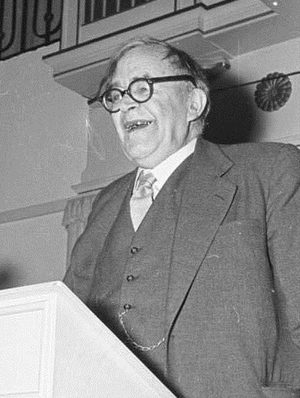

Karl Barth was a Swiss Reformed pastor and professor whose commentary on Romans and whose Church Dogmatics reshaped Protestant theology in the twentieth century, and who wrote most of the Barmen Declaration (1934) against the German Christians. He recast the Reformed teaching on election and rejected infant baptism, and Catholic, Lutheran and Reformed writers have all argued with him.
| Lived | 10 May 1886, Basel, to 10 December 1968, Basel |
|---|---|
| Church | Swiss Reformed pastor; professor of Reformed theology |
| Role | Pastor at Safenwil (1911–1921); professor at Göttingen (1921–25), Münster (1925–30), Bonn (1930–35) and Basel (1935–62) |
| Influenced by | The Reformed confessions; his father Fritz Barth, a Swiss Reformed minister and professor of New Testament at Bern |
| Influenced | The Confessing Church, through the Barmen Declaration; Reformed, Lutheran and Catholic theologians who wrote on him, among them Hans Urs von Balthasar and Hans Küng |
| Writings | The Epistle to the Romans (1919; rewritten 1922); Nein! (1934); Church Dogmatics (1932–1967, unfinished, thirteen volumes); Ad Limina Apostolorum (1967) |
| Honored | 10 December in the Episcopal Church's Holy Women, Holy Men (2010); the Barmen Declaration stands in the Presbyterian Church (U.S.A.) Book of Confessions |
Life
Barth was born in Basel, the eldest child of Fritz Barth, and grew up in Bern, where his father taught New Testament and early church history. He studied at Bern, Berlin, Tübingen and Marburg, served as a pastor in Geneva (1909–1911), and from 1911 to 1921 in Safenwil, in the canton of Aargau, a parish of working people. In 1913 he married Nelly Hoffmann; they had five children. At Safenwil he wrote his commentary on Romans (published December 1918, dated 1919) and then a thoroughly rewritten second edition (1922). Invited to Göttingen on the strength of the first, he was professor there from 1921, then at Münster (1925–1930) and Bonn (1930–1935). Church Dogmatics began with the volume of 1932.
The Confessional Synod of the German Evangelical Church, with Lutheran, Reformed and United delegates, met at Barmen on 29–31 May 1934, and Barth wrote most of its Declaration. That year he also published Nein! in answer to Emil Brunner, who had argued that theology has a place for natural theology. In 1935 he was dismissed from Bonn after refusing the oath to Hitler unless it were qualified by the words "to the extent that I responsibly am able as a Protestant Christian," and took a chair at Basel, where he taught until 1962. He gave the main address at the first assembly of the World Council of Churches at Amsterdam (1948), and appeared on the cover of Time on 20 April 1962. Invited to the Second Vatican Council but unable to attend, he spent a week in Rome in September 1966 and described it in Ad Limina Apostolorum (1967). He died in Basel on 10 December 1968.
What he taught
The second Romans broke with liberal theology and began what was called dialectical theology. In Church Dogmatics Barth set out the Word of God in three forms: Jesus Christ the revealed Word, Scripture that bears witness to him, and the church's preaching. He held that God is known only where God reveals himself in Christ, and so refused natural theology. The first thesis of Barmen, which he drafted, says that Jesus Christ "is the one Word of God," and rejects the claim that the church may recognize "other events and powers, figures and truths" as revelation (8.11, 8.12). He regarded the Catholic analogia entis (analogy of being) as the point on which he could not become Catholic, and called it the invention of the Antichrist (Church Dogmatics I/1, preface).
In Church Dogmatics II/2 (1942) he rejected the idea of a hidden eternal decree that elects some and passes over others, and taught that Jesus Christ is himself both the elected and the rejected one, so that election is election in him (predestination). Brunner charged that this amounted to universal salvation; Barth denied that he was a universalist. In 1943 he lectured to Swiss theological students on baptism and criticized infant baptism, and in the unfinished last part-volume (IV/4, 1967) he treated baptism as the human answer to God's grace rather than a sacrament (infant baptism). After the war he opposed the nuclear arms race and worked against the Cold War divide.
What historians say
Scholars debate the label "neo-orthodoxy," which Barth himself disliked along with "crisis theology," and whether he stayed within the Reformed tradition or left it. In 1969 Harold O. J. Brown reported in Christianity Today that many evangelical scholars found riches in most of his work but saw "internal weaknesses" in his view of revelation; Cornelius Van Til's Christianity and Barthianism (1962) criticized that view of revelation and of the Word of God. Küng argued, with Barth's agreement, that Barth's doctrine of justification matches the Catholic teaching.
Two matters are discussed with care. The first is the Church Struggle. Barmen's theses address the church's own proclamation and order and do not mention the Jews; historians note that most Confessing Church leaders concentrated on keeping the state out of church affairs rather than on opposing persecution, while defenders point to Barmen's refusal of any lord besides Christ and to Barth's dismissal from Bonn (the Church Struggle; the Reformed record). The second is his companion Charlotte von Kirschbaum (1899–1975), who met him at Göttingen in 1924, became his secretary and assistant, and from October 1929 lived in the Barth household with Nelly and the children. In the preface to Church Dogmatics III/3 he said she gave "no less of her life and powers" to the work than he did. Christiane Tietz, who studied their letters of 1925–1935, reports a relationship of deep love, and the Princeton Barth Center says the arrangement lasted about thirty-five years and strained everyone involved.
How the churches see Barth
- Catholic:
The Catholic Church has issued no judgment on Barth's writings; the response comes from theologians. Hans Urs von Balthasar's The Theology of Karl Barth (1951) is a Catholic classic on him, and Barth is reported to have agreed with its account of his work. Hans Küng's Justification (1957) carried a letter from Barth (31 January 1957) saying that if Küng's Part Two "is actually the teaching of the Roman Catholic Church," then his own view of justification "agrees with the Roman Catholic view." Erich Przywara wrote that the analogia entis "in no way signifies" natural theology, and many Catholic writers hold that Barth's early objections rested on a caricature. Invited as a guest to Vatican II, Barth visited Rome in 1966 for talks with Catholic officials and wrote Ad Limina Apostolorum, an appraisal of the Council.
- Orthodox:
The Orthodox Church has made no statement about Barth. The Orthodox priest and theologian Demetrios Bathrellos (2025), in a study of how Florovsky and Zizioulas received Chalcedon, notes that Wolfhart Pannenberg called the Council an unsuccessful compromise, whereas Barth was "far more open" to it, but interpreted it "in ways that are not always compatible" with the Council's own Christology.
- Lutheran:
Lutheran delegates took part in the Barmen synod, and the 1948 constitution of the Evangelical Church in Germany affirms its decisions (art. 1); yet many Lutherans hesitated to make it a confession. The Bavarian bishop Hans Meiser pressed for a "declaration" rather than a confession, on the ground that a new synodal confession would found a non-Lutheran church. The Erlangen Lutheran Hermann Sasse accused Meiser of extending the Union across the Reich by his signature, and after the war some confessional Lutherans called Barmen an accident of church history. The Ansbach Counsel (1934), signed by the Erlangen professors Paul Althaus and Werner Elert, taught that God also reveals himself in family, people and race, which Barmen's first thesis excludes (Helmut Frank, Sonntagsblatt, 2017).
- Reformed:
The Presbyterian Church (U.S.A.) printed Barmen in its Book of Confessions (8.01–8.28) when the book was enlarged in 1967, describing it as the response of some Reformed and Lutheran churches in Germany to the question of loyalty to Christ and loyalty to the state. When the Reformed Alliance, with the EKD and other bodies, opened a year of commemoration on 10 December 2018, its general secretary Achim Detmers called Barth "the greatest theologian of the 20th century." The Westminster Confession states the older doctrine of election, that "some men and angels are predestinated unto everlasting life" (3.3); Barth's revision of it drew the criticism of Brunner, and Reformed critics such as Van Til disagreed with him on revelation and the Word of God.
- Anglican:
The Episcopal Church's Holy Women, Holy Men (2010), a supplemental calendar published for trial use, lists "Karl Barth, Pastor and Theologian, 1968" on 10 December, with a collect. Rowan Williams, later Archbishop of Canterbury, contributed "Barth on the Triune God" to Karl Barth: Studies of His Theological Method (Oxford, 1979), an essay that examines Barth's doctrine of the Trinity critically.
- Methodist:
No Methodist body has issued a statement on Barth. David Gilland (Holiness, the journal of Wesley House, Cambridge, 2017) reports that many in Pietist and Methodist circles have been skeptical of Barth since his early commentaries on Romans criticized Pietism, and discusses Barth's remarks on religious experience to Methodist preachers in Switzerland (conversation of 16 May 1961).
- Baptist:
No Baptist convention or union has issued a statement on Barth. His rejection of infant baptism brought him nearer to Baptist practice than to that of his own Reformed church, though his reasons differed: he denied that baptism is a sacrament and treated it as the human answer to grace (Church Dogmatics IV/4). The Second London Confession (1677; 1689), which many Baptists hold, reserves baptism to those who "actually profess" repentance and faith (29.2).
Sources
- Princeton Theological Seminary, Center for Barth Studies, biography dates, posts, oath, Basel, Kirschbaum
- Theological Declaration of Barmen, Book of Confessions of the Presbyterian Church (U.S.A.), 8.01–8.28
- EKD, "The Barmen Declaration" synod of 29–31 May 1934
- Church Struggle chapter on this site: the German Protestant churches under National Socialism
- Evangelical Church in Hesse and Nassau (Barth drafted Barmen, 15–16 May 1934)
- Brunner, "Nature and Grace," and Barth, "Nein!" (1934), in Natural Theology (1946); Marquette dissertation on the debate
- Barth to Hans Küng, letter of 31 January 1957, in Küng, Justification (1964)
- Colón-Emeric, "Symphonic Truth: Von Balthasar and Christian Humanism," The Christian Century 122 (31 May 2005)
- Frank, "Barmer Theologische Erklärung der Bekennenden Kirche," Sonntagsblatt (17 March 2017)
- Standing Commission on Liturgy and Music, Holy Women, Holy Men: Karl Barth (10 December)
- World Communion of Reformed Churches, "Karl Barth's life and work to be commemorated" (4 December 2018)
- Brown, "Karl Barth: Homage for a Titan," Christianity Today (3 January 1969)
- Bathrellos, "The Reception of Chalcedon: Georges Florovsky and John Zizioulas," Ortodoksia (2025)
- Gilland, "What has Basel to do with Epworth? Karl Barth on Pietism and the theology of the Reformation," Holiness 3 (2017)
- Tietz, "Karl Barth and Charlotte von Kirschbaum," Theology Today 74 (2017)
- Sykes (ed.), Karl Barth: Studies of His Theological Method (Oxford: Clarendon, 1979)
- Second London Baptist Confession (1689), ch. 29
- Barth, The Teaching of the Church Regarding Baptism (1943), publisher's description
- Portrait by Hans Lachmann, 1956, Wikimedia Commons (CC BY-SA 3.0 de)