John Keble 1792–1866
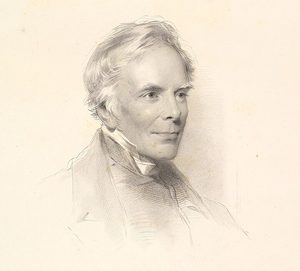

John Keble was an Oxford fellow, poet and country parson whose devotional verse, The Christian Year (1827), made him one of the best-loved Anglican writers, and whose Assize Sermon of 14 July 1833 is the day John Henry Newman counted as the start of the Oxford Movement. He held that the Church of England is a divine society descended from the apostles, a claim that Catholics, Orthodox and Protestants have each answered in their own way.
| Lived | 25 April 1792, Fairford, Gloucestershire, to 29 March 1866, Bournemouth |
|---|---|
| Church | Church of England priest (deacon 1815, priest 1816) |
| Role | Fellow of Oriel College, Oxford (1811); Professor of Poetry at Oxford (1831–41); vicar of Hursley, Hampshire (from 1835 or 1836 to his death) |
| Influenced by | His father, a High Church clergyman; the Caroline divines and Richard Hooker; the Church Fathers |
| Influenced | John Henry Newman, Edward Pusey and the Tractarians; Anglo-Catholic worship and piety |
| Writings | The Christian Year (1827); National Apostasy (1833); several of the Tracts for the Times; edition of Hooker's Works (1836); On Eucharistical Adoration (2nd ed. 1859) |
| Honored | 14 July (Lesser Festival) in the Church of England calendar; 29 March in the Episcopal Church calendar |
Life
Keble was the second child of the Rev. John Keble, vicar of Coln St Aldwyn, a High Church clergyman who taught his sons at home. He won a scholarship to Corpus Christi College, Oxford, took a double first in 1810 and was elected a fellow of Oriel in 1811. He was ordained deacon in 1815 and priest in 1816, and in 1823 became his father's curate at Fairford. The Christian Year, a cycle of poems for the Sundays and holy days of the Prayer Book, appeared anonymously in 1827; a second edition was called for within the year, and it sold over 100,000 copies in twenty-five years. He was elected Professor of Poetry in 1831 and held the chair for ten years.
On 14 July 1833 he preached the Assize Sermon at St. Mary's, Oxford, on 1 Samuel 12:23; published as National Apostasy, it protested against the suppression of ten Irish bishoprics by Parliament. The Tracts for the Times began that September, and Keble wrote several of them. His edition of Hooker's Works appeared in 1836, the year he became vicar of Hursley, a living given him by Sir William Heathcote (sources give 1835 or 1836). When Newman's Tract 90 was condemned in 1841, Keble and Pusey defended it. After Newman became a Catholic in 1845, Keble did not follow; in a letter of 21 October he wrote that Newman's step had "not been so very inconsistent with my theory of neutrality towards Rome being our natural position." In 1850 he signed, with Pusey and Henry Manning, a declaration against the Gorham judgment; Manning joined the Catholic Church the next year, and Keble stayed. He died at Bournemouth on 29 March 1866 and was buried at Hursley on 6 April. Keble College, founded in his memory, opened in 1870.
What he taught
The Church as a divine society. The Assize Sermon holds that "disrespect to the Successors of the Apostles, as such, is an unquestionable symptom of enmity to Him," and warns of a day when "the Apostolical Church should be forsaken, degraded, nay trampled on and despoiled by the State." Keble held that the Church of England has the apostolic ministry (apostolic succession) and should not be governed by the state; the Catholic Encyclopedia reports that he called the bishops appointed by "an infidel government" Erastians. He did not look to Rome: The Catholic Encyclopedia says Keble had "a great dislike of Rome" as well as of "Dissent and Methodism." It says he took over the doctrines of the Laudian school, and calls him "gentle, shrewd, and saintly."
The sacraments. Newman wrote in the Apologia that The Christian Year taught him "the Sacramental system," the doctrine "that material phenomena are both the types and the instruments of real things unseen." In On Eucharistical Adoration Keble took "generally the doctrine of the Real Presence for granted" and argued that adoration is owed to Christ, who comes in the Lord's Supper as Giver and Gift. Answering the objection that Rome uses the same passages, he wrote that "the mere use of a doctrine or an interpretation by the Roman Catholics is no reason why we should reject it."
What historians say
Newman wrote that he had "ever considered and kept" 14 July 1833 as the start of the movement, and R. W. Church followed him. Others have asked how much weight the day can bear: F. L. Cross included an appendix, "The Myth of July 14, 1833," in his John Henry Newman (1933), and the Catholic Encyclopedia calls the sermon "in itself not very striking." Liddon records that the copy of the published sermon sent to Pusey "from the author" was still uncut.
Assessments of Keble himself differ. The Catholic Encyclopedia calls him "inflexible, never open to development," and Georgina Battiscombe titled her biography John Keble: A Study in Limitations (1963). Kirstie Blair's edited John Keble in Context (2004) is described by its publisher as the first major reassessment of his work in several decades. The Tractarians were widely suspected of working for Rome, and Low Church opponents led by the Rev. Golightly raised the Martyrs' Memorial at Oxford (completed 1841–43) to recall that the Reformers were burned by Catholics. For the Church of England's wider history, see the Anglican record and the Anglican family.
How the churches see Keble
- Catholic:
Leo XIII's bull Apostolicae Curae (1896) declared that ordinations "carried out according to the Anglican rite have been, and are, absolutely null and utterly void"; the archbishops of Canterbury and York answered in Saepius Officio (1897) (Anglican orders). Keble's claim for the apostolic ministry therefore meets a formal Catholic denial. The Catholic Encyclopedia (1913) describes Keble as conservative and anti-Roman, and records that he and others stayed after Newman left. Newman, canonized in 2019 (John Henry Newman), wrote as a Catholic that Keble "struck an original note" in The Christian Year.
- Orthodox:
The Orthodox Church has made no statement about Keble. Orthodox contact with the Tractarians came through William Palmer of Magdalen College: in 1840 and 1842 he went to Russia seeking recognition of the Anglican Church as a branch of the Catholic Church, and the Metropolitan of Moscow rejected his claim. Palmer was troubled that the Russian Church would receive him by chrismation and the Greek Church by baptism, and he became a Catholic in 1855 (Orthodox Church in America; Catholic Encyclopedia). The Confession of Dositheus (1672, Decree 10) teaches that bishops are the successors of the apostles.
- Lutheran:
No Lutheran church has made a statement about Keble. The Swedish theologian Yngve Brilioth, later Archbishop of Uppsala (1950–58), wrote The Anglican Revival: Studies in the Oxford Movement (1925). On the point Keble pressed, the Augsburg Confession (art. VII) names the Gospel rightly preached and the sacraments rightly administered as the marks of the Church, and the Church of Sweden retains the historic succession without making it essential (apostolic succession).
- Reformed:
No Reformed church has made a statement about Keble. On his teaching about the Supper, the Westminster Confession (29.4) calls worshipping the elements or "carrying them about for adoration" contrary to Christ's institution, and it holds that worthy receivers feed on Christ by faith (the Lord's Supper). It sets ministers apart by election and the laying on of the elders' hands, not by a line of bishops.
- Anglican:
The Church of England keeps John Keble, "Priest, Tractarian, Poet, 1866," as a Lesser Festival on 14 July, the day of the Assize Sermon; the Episcopal Church lists him on 29 March. Keble College, Oxford, was founded in his memory by public subscription and opened in 1870. Evangelical Anglicans answered the Tractarians with the Articles and the Prayer Book: Article 28 says the Supper "was not by Christ's ordinance reserved, carried about, lifted up, or worshipped," and J. C. Ryle, in Knots Untied, wrote of Christ's body and blood in the elements, "We say that they are not." Defenders of Keble answer that the adoration he taught is paid to Christ, not to the bread and wine (see the Black Rubric).
- Methodist:
No Methodist church has made a statement about Keble. The Catholic Encyclopedia says Keble disliked "Dissent and Methodism" as well as Rome. The Articles of Religion of the Methodist Church (Article XVIII), taken from the Anglican Articles, say that the Lord's Supper was not by Christ's ordinance "reserved, carried about, lifted up, or worshiped."
- Baptist:
No Baptist body has made a statement about Keble. The Second London Confession (1689), which many Baptists hold, says that the bread and wine remain "truly, and only Bread, and Wine" (30.5), and that transubstantiation "overthroweth the nature of the ordinance" and has caused "gross Idolatries" (30.6).
Sources
- Encyclopaedia Britannica, 11th ed. (1911), "Keble, John" (Wikisource) birth, Oriel, ordination, Professor of Poetry, Assize Sermon, Hursley, death
- Project Canterbury, "John Keble" (biography) Hooker 1836, Christian Year sales, burial 6 April
- Hymnary.org, "John Keble" Christian Year, 1827; Hursley 1836
- Keble, National Apostasy (Assize Sermon, 14 July 1833), Project Canterbury
- Keble, On Eucharistical Adoration (2nd ed., 1859), Preface and ch. 1, Project Canterbury
- Newman, Apologia Pro Vita Sua (1865), chapter 1
- Catholic Encyclopedia (1913), "The Oxford Movement (1833-1845)"
- Catholic Encyclopedia (1913), "William Palmer (1811-1879)"
- Liddon, Life of Pusey, vol. 1, ch. 12 (the Assize Sermon and Pusey's copy)
- Liddon, Life of Pusey, vol. 2, ch. 33 (Keble's letter of 21 October 1845)
- R. W. Church, The Oxford Movement: Twelve Years 1833-1845, ch. 6, Project Canterbury
- F. L. Cross, John Henry Newman (London: Philip Allan, 1933), Appendix IV cited for the title of the appendix
- Battiscombe, John Keble: A Study in Limitations (1963)
- Blair, ed., John Keble in Context (Anthem Press, 2004)
- Leo XIII, Apostolicae Curae (1896)
- Orthodox Church in America, "Relations between the Churches East and West"
- Church of England, Articles of Religion
- Episcopal Church, Calendar of the Church Year
- Church of England calendar, 14 July (Lesser Festival)
- Keble College, history
- J. C. Ryle, Knots Untied, "The Lord's Supper"
- The Martyrs' Memorial at Oxford, Journal of Ecclesiastical History
- Augsburg Confession (Book of Concord)
- Westminster Confession of Faith, ch. 29
- Articles of Religion of the Methodist Church, Article XVIII
- Second London Baptist Confession (1689), ch. 30
- Portrait of John Keble, Wikimedia Commons (CC0)