Lourdes 1858
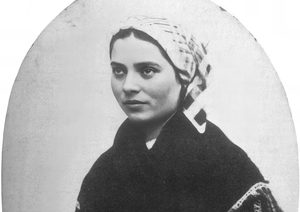

Between 11 February and 16 July 1858, Bernadette Soubirous, a fourteen-year-old miller's daughter, reported eighteen appearances of a lady in white at the Massabielle grotto outside Lourdes in the French Pyrenees. The bishop of Tarbes judged in 1862 that the faithful could believe it, and Lourdes has become a major Catholic pilgrimage shrine with its own medical bureau for healings reported there. The churches differ on what, if anything, they can accept of such claims.
| Date | 11 February to 16 July 1858 (eighteen apparitions) |
|---|---|
| Place | Grotto of Massabielle, Lourdes, in the Pyrenees, France (Diocese of Tarbes and Lourdes) |
| Claimed by | The Catholic Church, on the testimony of Bernadette Soubirous (1844–1879) |
| Type | Marian apparition; a spring; healings reported by pilgrims |
| Official status | Judged by Bishop Laurence of Tarbes on 18 January 1862 to have "all the characteristics of truth"; Our Lady of Lourdes is on the General Roman Calendar (11 February, optional memorial); 72 healings recognized as miraculous (latest announced April 2025) |
| Investigations | Episcopal commission (1858–62); Lourdes Medical Bureau (1883) and International Medical Committee (1954); sceptical medical-historical study (François, Sternberg and Fee, 2012) |
What is claimed
According to Bernadette, on Thursday 11 February 1858 she went to Massabielle, on the bank of the river Gave, to gather dead wood with her sister and a neighbor. As she took off her stockings to cross the stream she heard a noise like a gust of wind, and in the grotto she saw a young woman in white with a blue sash and a yellow rose on each foot (Lourdes sanctuary; Fides). The last of the eighteen apparitions was on Friday 16 July 1858; a barrier blocked the path, and Bernadette saw the lady from across the Gave.
On 25 February, according to the sanctuary's account, the lady told her to drink from the spring. She found only a little muddy water and drank on her fourth attempt; when onlookers asked whether she was mad, she answered, "It is for sinners." On 25 March, the day of the sixteenth apparition, Bernadette asked the lady her name, and the reply was given in the local dialect, in the sanctuary's spelling: "Que soy era Immaculada Concepciou," translated "I am the Immaculate Conception." Bernadette, the sanctuary says, did not understand the phrase. Pius IX had defined the Immaculate Conception as a dogma in 1854.
History and devotion
In 1858 Bishop Laurence of Tarbes set up a commission of inquiry into the authenticity and nature of the events. On 18 January 1862 he judged that "the Immaculate Mary, Mother of God, really appeared" to Bernadette on 11 February 1858 and the following days, eighteen times, and that the apparition "possesses all the characteristics of truth and that the faithful may believe in it with certainty" (Lourdes sanctuary). Leo XIII authorized a proper Office and Mass in 1892, and in 1907 Pius X extended the feast to the whole Church on 11 February. John Paul II instituted the World Day of the Sick in 1992, kept on the same day.
Bernadette lived in the convent of the Sisters of Charity at Nevers from 1866 until her death in 1879 at the age of 35. She was beatified in 1925 and canonized by Pius XI on 8 December 1933 (Lourdes sanctuary).
Investigations
The Medical Bureau. The Bureau des Constatations Médicales was founded in 1883 by Dr Georges-Fernand Dunot de Saint-Maclou at the request of Fr Rémi Sempé, the first rector of the sanctuary; physicians of any nationality or belief may take part. It became the Lourdes Medical Bureau in 1947, and an International Medical Committee, deciding by a two-thirds majority, replaced a national committee in 1954 (François et al.). Today the Bureau's permanent doctor hears claims; if a case is serious and the doctors present agree, it is studied and the Committee (about thirty members) votes on whether the cure is "unexplained in the present state of our knowledge." The bishop of the person's home diocese then decides whether to declare a miracle. Its seven criteria include a serious organic disease, a sudden cure that no treatment explains, and a return of all vital functions.
The sanctuary says more than 7,000 healings have been reported and that 70 had been recognized as miraculous. The 71st, announced by Archbishop Malcolm McMahon of Liverpool on 8 December 2024, was John Traynor, a British soldier cured in July 1923, whose cure the medical office had judged inexplicable in 1926. The 72nd, announced on 16 April 2025, was Antonia Raco, an Italian woman cured in 2009 of a neurological disease.
Sceptical studies. The historians Bernard François, Esther Sternberg and Elizabeth Fee estimate that 4,516 cures were acknowledged from 1858 to 1976, most resting on "rather flimsy evidence," and call the early Bureau's methods "at best inconsistent and, at worst, deceptive"; they note that follow-up was largely absent. They report that no cure was certified from 1976 to 2006 and read the Lambertini criteria (Benedict XIV's eighteenth-century canons) as set aside in 2006–8, so that new cures are called "remarkable" (Journal of the History of Medicine, 2014). The psychiatrist D. J. West's Eleven Lourdes Miracles (1957) gave the psychological side of the cures more weight, according to a 1958 Blackfriars article. The Bureau's reply is that its committee declares a cure only "unexplained" and leaves the word miracle to the bishop.
Bernadette's body. The sanctuary states that the body was exhumed in 1909, 1919 and 1925, and that "each time" it was "intact." The doctors' reports, as summarized by Thomas McDonald, record in 1909 no smell, skin clinging to the muscles and a slightly blackened lower body; in 1919, skin discolored and dried, with mildew and calcium crystals, a complete skeleton and well-preserved muscles; in 1925, supple skin and muscle fibers. A thin wax covering was then made for the face and hands, because of the skin's discoloration, according to a Westminster diocesan parish account, which says the body "apparently remained internally incorrupt" but is "not without blemish."
Official status
The Church has made two kinds of judgment. The bishop's judgment of 1862 says the faithful "may believe" the apparitions, which is permissive wording; Pius XII's encyclical Le Pèlerinage de Lourdes (1957) refers to that approval. The Catechism teaches that private revelations, even approved ones, cannot "improve" or "complete" Christ's revelation (CCC 67), so belief in Lourdes is not an article of faith. Of the healings, the Medical Committee says only that a cure is medically unexplained; the home bishop alone declares it a miracle, case by case. The feast of Our Lady of Lourdes on 11 February is an optional memorial.
Where each church stands
- Catholic:
Bishop Laurence's judgment of 18 January 1862 allows the faithful to believe the apparitions; Pius X extended the feast of 11 February to the whole Church (1907), Pius XII wrote Le Pèlerinage de Lourdes (2 July 1957), and Pius XI canonized Bernadette on 8 December 1933. Under the Catechism (CCC 67) approved private revelations do not belong to the deposit of faith, so belief in Lourdes is not required.
- Orthodox:
The Orthodox Church has made no official statement about Lourdes. Its teaching bears on the message the Lady is said to have given: it does not accept the Immaculate Conception as defined in 1854, holding that humanity inherits the consequences of Adam's sin, not its guilt, while honoring the Theotokos as All-Holy and without personal sin (Longer Catechism of St. Philaret, Q 190; OCA).
- Lutheran:
The Lutheran Confessions do not mention Lourdes or define an Immaculate Conception. Article XXI of the Augsburg Confession says "the Scripture teaches not the invocation of saints," and holds that saints are remembered so that "we may follow their faith and good works." They honor Mary as "pure, holy" but teach that all born in the natural way are born in sin (Smalcald Articles I.4; Augsburg Confession II).
- Reformed:
The Westminster Confession (1.1) says that "those former ways of God's revealing his will unto his people" are "now ceased," and many Reformed writers take this to mean that the miraculous gifts ended with the apostles. The Heidelberg Catechism (Q 30) says those who seek salvation or help in saints deny the only Savior.
- Anglican:
Article XXII calls "the Romish Doctrine" of "Invocation of Saints" "a fond thing vainly invented." Article VI says nothing that "is not read" in Scripture or cannot "be proved thereby" is to be required as an article of faith. The Articles do not name Lourdes. Practice differs: Evangelicals hold to the Articles, while many Anglo-Catholics ask Mary and the saints to pray for them.
- Methodist:
Article XIV of the Articles of Religion calls the "Romish doctrine" of "invocation of saints" "a fond thing, vainly invented." Wesley, in Sermon 89, "The More Excellent Way," held that the extraordinary gifts of the Holy Ghost were not common in the church for more than two or three centuries. No Methodist article names Lourdes.
- Baptist:
The Second London Confession (1677/1689, 1.6) says nothing at any time is "to be added, whether by new Revelation of the Spirit, or traditions of men," and (1.1) that God's former ways of revealing his will are "now ceased." No Baptist confession names Lourdes. Baptists are divided on whether the miraculous gifts continue.
Sources
- Sanctuary of Lourdes, "The apparitions" 11 February, 25 February, 25 March, 16 July 1858
- Sanctuary of Lourdes, "The recognition of the Lourdes apparitions" the 1862 judgment
- Sanctuary of Lourdes, "The miracles of Lourdes" process, seven criteria, 7,000 reports, 70 recognized (as consulted)
- Sanctuary of Lourdes, "Medical Bureau" 1883 foundation; the International Medical Committee
- Sanctuary of Lourdes, "Bernadette Soubirous, a humble messenger" dates of the life, canonization and exhumations
- Sanctuary of Lourdes, World Day of the Sick
- Fides, "The 18 Apparitions of the Blessed Virgin Mary at Lourdes in 1858 (1)"
- Catholic Encyclopedia (1910), "Lourdes"
- Pius XII, Le Pèlerinage de Lourdes (2 July 1957)
- Catholic Culture, liturgical calendar for 11 February (Optional Memorial of Our Lady of Lourdes)
- François, Sternberg and Fee, "The Lourdes Medical Cures Revisited," Journal of the History of Medicine and Allied Sciences 69 (2014)
- America, "Lourdes confirms first miracle of an English speaker" (10 December 2024)
- Catholic World Report, "Lourdes announces 72nd miracle" (16 April 2025)
- Catholic News Agency / National Catholic Register, the story of Lourdes' 72nd miracle
- McDonald, "The Marvelous Preservation of St. Bernadette," National Catholic Register (2019) exhumation reports of 1909, 1919 and 1925
- Parish page, Hillingdon (Roman Catholic Diocese of Westminster), on St Bernadette the wax coverings of 1925
- Blackfriars, "Proximate and Ultimate" (1958), mentioning D. J. West, Eleven Lourdes Miracles (Duckworth, 1957)
- Augsburg Confession, Article XXI (Book of Concord)
- Church of England, Articles of Religion (VI, XX, XXII)
- United Methodist Church, Articles of Religion (Article XIV)
- Wesley, Sermon 89, The More Excellent Way (CCEL)
- Westminster Confession of Faith, chapter 1 (CCEL)
- Second London Baptist Confession (1689), chapter 1
- Bernadette Soubirous, photograph by Billard-Perrin, 1863, Wikimedia Commons (public domain)