Martin Chemnitz 1522–1586
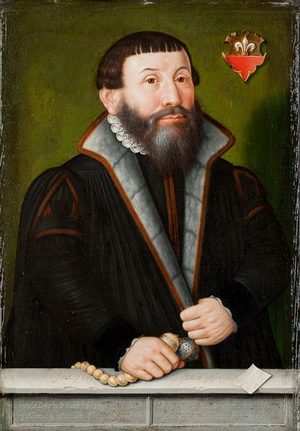

Martin Chemnitz was the pastor and church leader at Braunschweig who answered the Council of Trent point by point in his Examen (1565–73) and helped write the Formula of Concord (1577), which was meant to end the Lutheran disputes after Luther's death. Lutherans call him "the second Martin"; Catholics, Reformed and others have each had to answer his arguments on Scripture and tradition, justification and the Lord's Supper.
| Lived | 9 November 1522, Treuenbrietzen, to 8 April 1586, Braunschweig |
|---|---|
| Church | Lutheran pastor, ordained at Wittenberg by Johannes Bugenhagen |
| Role | Librarian to Duke Albert of Prussia at Königsberg (1550); coadjutor (from 1554) and superintendent (1567–84) at Braunschweig; doctor of theology, Rostock (1568) |
| Influenced by | Philipp Melanchthon, on whose Loci Communes he lectured; Luther; the Church Fathers |
| Influenced | The Formula of Concord, above all Article VIII on the person of Christ; the churches that subscribe the Book of Concord |
| Writings | Repetitio sanae doctrinae de vera praesentia (1561; English The Lord's Supper); Theologiae Jesuitarum praecipua capita (1562); Examen Concilii Tridentini (1565–73); De duabus naturis in Christo (1570); Loci Theologici, Harmonia evangelica and Postilla (all posthumous, 1591–93) |
| Honored | 9 November (his birthday) in Lutheran Service Book, as "Pastor and Confessor" |
Life
Chemnitz was born at Treuenbrietzen, a town near Wittenberg, and his father died when he was eleven. He went to school at Magdeburg (1539–42), studied at Frankfurt an der Oder from 1543, and in 1545 came to Wittenberg, on Melanchthon's advice, to study mathematics. He heard Luther in Luther's last years and wrote later that he had not given him the attention he should. In 1547 he followed a relative, Georg Sabinus, to Königsberg, took his master's degree in 1548, and in 1550 became the duke's librarian; there he read Scripture in Hebrew and Greek and then the Fathers. He left in 1553 or 1554 over the Osiandrian controversy, lectured at Wittenberg on Melanchthon's Loci Communes, and was ordained by Bugenhagen.
From December 1554 he was coadjutor to Joachim Mörlin at Braunschweig, and in 1567 he succeeded him as superintendent. He married Anna Jaeger in 1555; six of their ten children reached adulthood. He drew up church orders for Prussia (1567) and for Braunschweig-Wolfenbüttel (1569, 1576) and helped Duke Julius found the university at Helmstedt (1576), but broke with the duke in 1578. In the Formula of Concord's making he took part at Torgau (1576), then revised the text at Bergen in 1577 with Jakob Andreae and Nikolaus Selnecker, and David Chytraeus, Andreas Musculus and Christoph Cornerus joined them; the Book of Concord appeared on 25 June 1580. Ill health made him resign on 9 September 1584.
What he taught
His Examen takes the decrees of Trent in order, answering each from Scripture, the Fathers and the history of doctrine. Trent's decree of 8 April 1546 receives Scripture and unwritten traditions "with an equal affection of piety, and reverence." Chemnitz held that Scripture alone is a sufficient basis of doctrine and that traditions can err, yet he valued tradition rightly used, and he argued that Rome, not the Lutherans, had departed from the early church, notably on justification by faith (see holy tradition).
In De duabus naturis in Christo (1570), which underlies Article VIII of the Formula, he taught that the two natures of Christ are united in one person and that the divine nature lends the human nature its powers, as in the miracles and the risen Christ's passing through closed doors. This is the ground of his teaching on the Lord's Supper: because Christ's human nature shares the divine majesty, his body and blood are truly present, as the Reformed deny, holding that his body is in heaven. Schaff's encyclopedia reports that Brenz and the Swabians held an absolute ubiquity of the human nature, while Chemnitz and the Saxons held only a relative presence, wherever Christ wills. J. A. O. Preus wrote that Chemnitz "was more than a theologian. He was a pastor."
What historians say
Opinion on the Examen has divided. Christianity Today (1973) reports that R. Mumm called it a masterpiece but a monument without present relevance, while Wilhelm Pauck held that it showed that Rome, not Protestantism, had departed from the ancient church. It also reports that Catholic scholars disagree about Trent's decree on traditions: Geiselmann and Tavard read it so as to soften the charge of two sources of revelation, while Lennerz held that Trent did set up two, the view Chemnitz attacked. On his Christology, the Schaff-Herzog Encyclopedia (a Protestant reference work) says he "sought vainly to mediate" between the Swabians and the Wittenberg Philippists and left Christ's humanity "at once essentially circumscribed and potentially omnipresent"; Lutheran writers, such as the Concordia Historical Institute, present his view as grounded in Scripture and the Fathers.
The saying "If it had not been for the Second Martin, the first Martin would not have endured" is quoted by the LCMS; Christianity Today says it was the verdict of Catholic contemporaries, but an earliest source is not established. The Formula he helped write was itself disputed: in 1581 the Reformed theologian Zacharias Ursinus wrote the Admonitio Christiana at Neustadt to vindicate the Reformed doctrine against the Book of Concord. The Deutsche Biographie records his break with Duke Julius (1578) and his lasting disputes with Helmstedt over the Erfurt Apology of the Formula (1582) (the Lutheran record).
How the churches see Chemnitz
- Catholic:
Diogo de Payva de Andrada (1528–1575), a Portuguese theologian at the Council of Trent, wrote ten books of Orthodox Explanations (Decem libri orthodoxarum explicationum) against Chemnitz's earlier work, and Chemnitz replied with the Examen. Andrada's own answer, Defensio Tridentinae fidei, was published at Lisbon in 1578; his death in 1575 kept him from finishing it (Catholic Encyclopedia). The Louvain theologian Josse Ravesteyn (d. 1570) wrote an Apologia defending Trent's decrees on the sacraments against the censures and examination of Martin Kemnitz. The Catholic Encyclopedia (1913) names Chemnitz and Gerhard "the two ablest Lutheran theologians." Vatican II says that "it is not from Sacred Scripture alone that the Church draws her certainty" (Dei Verbum 9), and the 1999 Joint Declaration on Justification says that Trent's condemnations do not apply to the Lutheran teaching it sets out. The Catholic Church has made no statement about Chemnitz himself.
- Orthodox:
The Orthodox Church has made no statement about Chemnitz. The Confession of Dositheus (Synod of Jerusalem, 1672), Decree 17, teaches that the bread "truly, really, and substantially" becomes the Lord's body and condemns the followers of Luther on the Supper. The Lutheran-Orthodox Joint Commission (from 1981) has studied "Salvation: Grace, Justification and Synergy."
- Lutheran:
Lutherans honor Chemnitz as a confessor and a teacher of the church. Lutheran Service Book commemorates him on 9 November as "Pastor and Confessor," and the Missouri Synod publishes his works through Concordia Publishing House, which has issued Fred Kramer's translation of the Examination and Preus's translations of The Two Natures and The Lord's Supper. The Formula of Concord, which he helped write, is in the Book of Concord that every Missouri Synod pastor pledges himself to, as a testimony and not a judge: Scripture remains "the only judge, rule, and standard" (Epitome, Rule and Norm).
- Reformed:
The Heidelberg Catechism (1563), a confession of many Reformed churches, says that with respect to his human nature Christ "is no more on earth" (Q 47) and that the bread is "not changed into the very body of Christ" (Q 78); on the presence of Christ's body in the Supper, Chemnitz and the Reformed stand opposed. In 1581 Ursinus and the Neustadt theologians published the Admonitio Christiana against the Book of Concord. The Leuenberg Agreement (1973) declares the condemnations between Lutheran and Reformed churches inapplicable for the churches that sign it.
- Anglican:
The Church of England has made no statement about Chemnitz. Article XXVIII holds that the body of Christ "is given, taken, and eaten, in the Supper, only after an heavenly and spiritual manner," with faith as the means, and Article XXIX that the wicked are not "partakers of Christ"; the Lutheran confessions say that the unworthy receive the body and blood to their judgment. Article VI says that Scripture contains all things necessary to salvation.
- Methodist:
The Methodist churches have made no statement about Chemnitz. Their Article XVIII (from Wesley's 1784 revision of the Anglican articles) says that Christ's body is given and eaten "only after a heavenly and spiritual manner," and rejects transubstantiation. The United Methodist statement This Holy Mystery (2004) affirms Christ's "real, personal, living presence" without saying how.
- Baptist:
Baptists have made no statement about Chemnitz. The Second London Confession (1677) rejects transubstantiation (30.6) and teaches that worthy communicants receive Christ "spiritually" and not bodily (30.7), an account different from the bodily presence Chemnitz taught. Many Baptists hold the Supper to be a memorial only.
Sources
- Deutsche Biographie, "Chemnitz, Martin" (NDB) dates, offices, works, Formula of Concord
- Encyclopedia.com, "Chemnitz, Martin" (New Catholic Encyclopedia)
- Concordia Historical Institute, "Martin Chemnitz at 500: Life"
- Concordia Historical Institute, "Martin Chemnitz at 500: Work"
- Christianity Today, "Chemnitz on Trent: An Unanswered Challenge" (1973)
- Concordia Publishing House, "Martin Chemnitz" (2016)
- Concordia Publishing House, Lutheran Service Book commemorations (9 November)
- LCMS Missouri District, "The Second Martin"
- BookOfConcord.org, "Origin, Subscription, Character, etc., of the Formula of Concord"
- Council of Trent, Session 4 (Waterworth translation)
- Schaff-Herzog Encyclopedia, vol. 3, "The Scholastic Lutheran Christology" (communicatio idiomatum)
- Schaff-Herzog Encyclopedia, vol. 12, on Brenz, Chemnitz and ubiquity
- Schaff-Herzog Encyclopedia, vol. 12, on Ursinus and the Admonitio Christiana (1581)
- Catholic Encyclopedia, "Diego Andrada de Payva"
- Catholic Encyclopedia, "Josse Ravesteyn"
- Catholic Encyclopedia, "Lutherans and Lutheranism"
- Second Vatican Council, Dei Verbum (18 November 1965), no. 9
- Joint Declaration on the Doctrine of Justification (1999), paras. 40-41
- Confession of Dositheus (Synod of Jerusalem, 1672), Decree 17
- Lutheran-Orthodox Joint Commission (Pro Unione)
- Heidelberg Catechism (1563), Q 47-48, 76-78
- Leuenberg Agreement (1973)
- Church of England, Articles of Religion (VI, XXVIII, XXIX)
- Methodist Articles of Religion (Wesley, Sunday Service, 1784), Article XVIII
- Second London Baptist Confession (1689), ch. 30
- Portrait by Ludger tom Ring the Younger, Wikimedia Commons (public domain)