John Bunyan 1628–1688
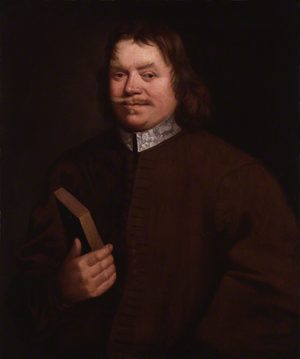

John Bunyan was a tinker from Bedfordshire who became a preacher, spent most of twelve years in jail for preaching without the Church of England's license, and wrote The Pilgrim's Progress, one of the most often printed Christian books in English. Baptists and Congregationalists both claim him, and the question whether he was a Baptist turns on his view of baptism and the Lord's Supper; Anglicans, Reformed and Methodists have each found a place for him.
| Lived | Baptized 30 November 1628, Elstow, Bedfordshire (the birth date is not recorded), to 31 August 1688, London |
|---|---|
| Church | Member from the 1650s, and from 1671 pastor, of the open-communion congregation at Bedford (now Bunyan Meeting); excommunicated by the Church of England in 1675 |
| Role | Tinker; soldier in the Parliamentary garrison at Newport Pagnell (1644–47); lay preacher; pastor of the Bedford congregation |
| Influenced by | John Gifford, the first minister of the Bedford congregation; Arthur Dent's The Plain Man's Pathway to Heaven and Lewis Bayly's The Practice of Piety, the two books his first wife brought as her dowry |
| Influenced | Readers of The Pilgrim's Progress in many traditions; John Wesley, who abridged it (1743) |
| Writings | Some Gospel-Truths Opened (1656); Grace Abounding to the Chief of Sinners (1666); A Confession of my Faith (1672); Differences in Judgment about Water-Baptism, No Bar to Communion (1673); The Pilgrim's Progress (Part I 1678, Part II 1684); The Life and Death of Mr. Badman (1680); The Holy War (1682) |
| Honored | 30 August, Lesser Festival in the Church of England ("John Bunyan, Spiritual Writer, 1688"); proposed for 29 August in the Episcopal Church's Holy Women, Holy Men (2010) |
Life
Bunyan was born at Elstow, near Bedford, and baptized there as an infant on 30 November 1628. In 1644 he joined the Parliamentary garrison at Newport Pagnell and was demobilized in July 1647. Around 1649 he married a woman whose name is not known; her dowry was two Puritan books, and they had four children, the eldest a blind daughter, Mary. A spiritual crisis lasting until about 1655 followed, described in Grace Abounding. After he overheard poor women of Bedford talking of their faith, he began attending the congregation gathered by John Gifford, a former Royalist officer. In 1655 he moved to Bedford, became a full member, and began to preach. His first book (1656) answered the Quakers. His first wife died in 1658, and in 1659 he married Elizabeth.
On 12 November 1660, six months after the Restoration, he was arrested for preaching at Lower Samsell, Bedfordshire. At the quarter sessions in January 1661 he refused to promise that he would stop, and he stayed in Bedford jail for about twelve years, making shoelaces to support his family and with occasional paroles. He wrote Grace Abounding (1666) there. On 21 December 1671 the congregation elected him pastor, and he was released early in 1672 under Charles II's Declaration of Indulgence; on 9 May 1672 he was licensed to preach. In 1675 the Church of England's authorities excommunicated him, and the Bishop of Lincoln obtained a writ for his arrest; he was jailed from December 1676 to June 1677, and John Owen is thought to have secured his release (John Bunyan Society chronology). The first part of The Pilgrim's Progress, the story of Christian's journey from the City of Destruction to the Celestial City, appeared in February 1678, and Part II (Christiana's journey) in 1684. Accounts differ on where it was written: the chronology has him begin it about 1668, in the first imprisonment, while the London Review of Books review of Greaves's biography places its completion in the 1677 jailing. On 31 August 1688 he died of a fever at the house of his friend John Strudwick in Holborn, after riding through heavy rain from Reading; he was buried on 2 September at Bunhill Fields.
What he taught
Bunyan was a Calvinist in the Puritan tradition. The Free Presbyterian minister John M. Brentnall (1978) summarizes his teaching as an eternal decree of election, a will bound by sin, and effectual grace that begins the sinner's journey, together with a free offer of Christ to all who hear; he quotes Bunyan's own words, "I am not a Free-willer" (predestination). Grace Abounding describes his own long spiritual crisis, and The Pilgrim's Progress turns the same conversion story into an allegory with Evangelist, the Slough of Despond, Vanity Fair and the River of Death.
His most disputed teaching concerned church membership and the Lord's Supper. In Differences in Judgment about Water-Baptism, No Bar to Communion (1673) he answered two Particular Baptists, T. P. (Thomas Paul) and W. K. (most probably William Kiffin), who had criticized the open communion of his Confession of Faith. He wrote that he would not have taken up the pen "had we been let alone at quiet in our Christian communion," and he argued that a church has no warrant to keep a believer from the table because he has not been baptized in water. Christian History says he held baptism to be God's ordinance but "would not make an idol of it." He replied again to Mr. D'Anvers and Mr. Paul in Peaceable Principles and True (1674). Timothy Haupt, a Baptist pastor who wrote a dissertation on Bunyan's view of the church, summarizes the difference: for Bunyan, membership in the visible church should follow faith and holiness, not baptism, and unity among believers outweighed the Baptist concern for a pure order (closed communion; baptism).
What historians say
The chief dispute is whether Bunyan was a Baptist. The Bedford congregation was a gathered church that did not require baptism for membership, and it kept fellowship with both Baptists and Congregationalists. The Bunyan Society chronology says he became a full member in 1655, "possibly after baptism by total immersion." Christian History reports that the Baptist Union of Great Britain honors him with a statue at its headquarters, while Congregationalists also claim him. Haupt argues that because of his open communion Bunyan "should not be considered" a seventeenth-century Baptist and proposes "evangelical Independent" as a better label; other Baptists have counted him among their own, though the Particular Baptists of his day disputed his terms of communion. Richard L. Greaves's Glimpses of Glory: John Bunyan and English Dissent (Stanford, 2002) is a full-length modern biography, and the congregation's own minutes are available in H. G. Tibbutt's edition.
Historians also differ on details: when The Pilgrim's Progress was written (the chronology: begun about 1668; others: finished after 1672), and the dates of the second imprisonment (the chronology: December 1676 to June 1677). Bunyan's prosecution is one of the best-known cases under the laws against nonconformist worship; the Church of England's own account of it, with the penal laws and the 2012 service of reconciliation with the United Reformed Church, is in the Great Ejection. The chronology also records the Agnes Beaumont affair of 1674, in which a woman who had ridden behind Bunyan to a meeting was rumored to have poisoned her father; a coroner's jury cleared her.
How the churches see Bunyan
- Catholic:
The Catholic Church has made no statement about Bunyan. Its teaching that bears on his quarrel with the Baptists is that infants are to be baptized, because children "have need of the new birth in Baptism" (Catechism, 1250), and that communion is for those who share the Catholic faith (closed communion).
- Orthodox:
The Orthodox Church has made no statement about Bunyan. Orthodox practice baptizes infants and gives them communion, and limits communion to Orthodox Christians, so the question he and Kiffin argued, whether an unbaptized believer may come to the table, is answered differently in both of its terms (closed communion).
- Lutheran:
The Lutheran churches have made no official statement about Bunyan. Article IX of the Augsburg Confession teaches that children are to be baptized, which bears on the baptismal question in his dispute with the Baptists (infant baptism).
- Reformed:
No Reformed church has made a statement about Bunyan as a person, but his doctrine has been read as Reformed: the Free Presbyterian Church of Scotland's magazine published a series for the 350th anniversary of his birth in 1978, and its summary of his teaching on election and grace describes him as a strict Calvinist rather than a moderate one. The Westminster Confession (28.4) says that the infants of believing parents are to be baptized, a point on which Bunyan's church, which let each member follow conscience on baptism, did not require the same rule.
- Anglican:
The Church of England lists "John Bunyan, Spiritual Writer, 1688" among its Lesser Festivals on 30 August, with its own collect and readings; observing a Lesser Festival is optional. The Episcopal Church's Standing Commission on Liturgy and Music proposed him in 2010 for 29 August as "John Bunyan, Writer, 1688" in Holy Women, Holy Men. The same church had excommunicated him in 1675. On 7 February 2012 the Church of England and the United Reformed Church held a service of reconciliation and healing of memories at Westminster Abbey, including an act of penitence led by the Archbishop of York (the Great Ejection).
- Methodist:
John Wesley published The Pilgrim's Progress from this World to that which is to come. Abridged by John Wesley, M.A., Fellow of Lincoln College, Oxford in 1743 (printed by John Gooding). The Methodist publisher Seedbed writes that the book was "a staple part of the fabric of Methodism" for nearly two hundred years, with competing editions from regional American Methodist publishers, and that the 1893 Probationer's Companion included a thirty-page outline study of it for new members.
- Baptist:
Baptists are divided over how to claim him. The Baptist Union of Great Britain honors him with a statue at its headquarters (Christian History), and open communion was later defended by the Baptist Robert Hall (1815). The Particular Baptists William Kiffin and Thomas Paul answered Bunyan in 1673, and Kiffin wrote A Sober Discourse of Right to Church-Communion (1681) against open communion. Timothy Haupt, pastor of First Baptist Church in Nixa, Missouri, argues that Bunyan cannot be counted a Baptist because he did not make baptism a condition of membership. The Second London Confession (1689), which many Baptists hold, reserves baptism for those who "actually profess" repentance and faith (29.2).
Sources
- John Bunyan Society, "Bunyan chronology" dates of the life, imprisonments, publications, death
- Christian History Institute, "John Bunyan: The Man, Preacher and Author"
- Christian History Institute, "John Bunyan" open communion; Baptist Union statue
- EBSCO Research Starters, "John Bunyan"
- Bunyan, Differences in Judgment about Water-Baptism, No Bar to Communion (1673), Works vol. 1–3
- Haupt, "Why John Was Not a Baptist," The Gospel Coalition (27 April 2022)
- Brentnall, "The Theology of John Bunyan," Free Presbyterian Magazine (October 1978)
- Minutes of the First Independent Church (now Bunyan Meeting) at Bedford 1656–1766, ed. H. G. Tibbutt (Boydell & Brewer)
- Greaves, Glimpses of Glory (Stanford, 2002): review in Church History 74 (2005)
- Paulin, "Holy Boldness," London Review of Books 26:24 (2004)
- Church of England, Common Worship Calendar 30 August, Lesser Festival
- Standing Commission on Liturgy and Music, "August 29: John Bunyan, Writer, 1688" (28 August 2010)
- Westminster Abbey, "Service for CofE and URC" (7 February 2012)
- Wesley, The Pilgrim's Progress abridged (1743), in John and Charles Wesley bibliography listing of the 1743 abridgment (J. Gooding)
- Seedbed, "Required Reading for Methodists: The Pilgrim's Progress"
- Catechism of the Catholic Church, para. 1250
- Augsburg Confession, art. IX (Book of Concord)
- Westminster Confession of Faith, ch. 28
- Second London Baptist Confession (1689), ch. 29
- Sadler portrait, Wikimedia Commons (public domain)