C. S. Lewis 1898–1963
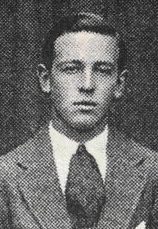

C. S. Lewis was an Oxford and Cambridge scholar of English literature and a lay member of the Church of England whose wartime radio talks, Mere Christianity and the Narnia books reached readers in every tradition. He called himself "a very ordinary layman of the Church of England," and each tradition has praised what it shares with him and named what it does not, from purgatory to the salvation of those who never hear the gospel.
| Lived | 29 November 1898, Belfast, to 22 November 1963, The Kilns, Oxford |
|---|---|
| Church | Lay member of the Church of England; weekly confession to an Anglican priest from 1940 |
| Role | Fellow and tutor in English, Magdalen College, Oxford (1925–1954); professor of Medieval and Renaissance Literature, Cambridge (elected 1954); lay apologist |
| Influenced by | J. R. R. Tolkien and Hugo Dyson (1931); Walter Adams of the Cowley Fathers, his confessor; Richard Baxter's phrase "mere Christianity" |
| Influenced | Readers in all seven traditions, as the readings below show |
| Writings | The Problem of Pain (1940); The Screwtape Letters (1942); The Great Divorce (1945); the Chronicles of Narnia (1950–1956); Mere Christianity (1952); Surprised by Joy (1955); A Grief Observed (1961); Letters to Malcolm (1964) |
| Honored | 22 November in the Episcopal Church's Calendar of the Church Year; memorial stone in Poets' Corner, Westminster Abbey (22 November 2013) |
Life
Lewis was born in Belfast. He entered University College, Oxford, in 1917, was commissioned in the Somerset Light Infantry, and was wounded in France in 1918. In 1925 he was elected a fellow of Magdalen College in English. In Surprised by Joy he dated his acceptance of God to Trinity term 1929. On the evening of 19 September 1931 he talked about myth and Christianity with Tolkien and Hugo Dyson, and on 28 September, going to Whipsnade Zoo with his brother, he took the final step to belief in Christ (dates as given in Walter Hooper's Companion and Guide).
His books followed: The Problem of Pain (1940), BBC radio talks from 1941, The Screwtape Letters (1942), The Great Divorce (1945), the first Narnia book in 1950 and Mere Christianity (1952). From October 1940 he made a weekly confession to Walter Adams, an Anglican priest of the Society of St John the Evangelist (the Cowley Fathers), until Adams died in 1952. In 1954 he was elected to a new chair of Medieval and Renaissance Literature at Magdalene College, Cambridge, and moved there in 1955.
Joy Davidman, an American writer who had divorced her husband, married Lewis at the Oxford register office on 23 April 1956. Lewis regarded this as "a legal convenience" and sought an Anglican marriage; the Bishop of Oxford is reported to have declined to bless it because she was divorced. On 21 March 1957 the Revd Peter Bide, a priest from another diocese, married them at her bedside in the Churchill Hospital. She died on 13 July 1960, and Lewis wrote A Grief Observed (1961) under a pseudonym. He died at The Kilns on 22 November 1963 and was buried at Holy Trinity, Headington Quarry.
What he taught
In the preface to Mere Christianity Lewis describes the faith common to Christians as "a hall out of which doors open into several rooms," the rooms being the churches, and warns that he offers "no help to anyone who is hesitating between two Christian 'denominations.'" He sent the draft of Book II to four clergymen: "The Methodist thought I had not said enough about Faith," and the Roman Catholic thought he had "gone rather too far about the comparative unimportance of theories." The Reformed writer Kevin DeYoung says that Lewis "does believe in a substitutionary theory of the atonement, but he rejects penal substitution" (compare justification).
In Letters to Malcolm (letter 20) he wrote of purgatory: "I believe in Purgatory," and "Our souls demand Purgatory, don't they?" According to the biographer Lyle Dorsett, he added that the Reformers had good reasons to doubt "the Romish doctrine" as it then stood, the phrase of Article XXII. He practiced private confession and prayed for the dead. On Mary and the papacy he was less sympathetic: Catholic Answers reports that when pressed he named "the authority of the pope" and the veneration of Our Lady as chief difficulties, and in a letter he wrote that she "does not want any of the attention which might have gone to her Son." In "Priestesses in the Church?" (Time and Tide, 14 August 1948) he argued that ordaining women would leave the Church "embarked on a different religion" (see women bishops and priests).
On those who never hear the gospel, critics describe his position as inclusivism: DeYoung says he believed in what "we might roughly call 'anonymous Christians,'" and the Calormene Emeth in The Last Battle (1956), who served Tash and is accepted by Aslan, is read the same way, though some evangelical defenders dispute that reading.
What historians say
Lewis's own date for his first conversion is disputed. Alister McGrath (C. S. Lewis: A Life, 2013) argues from Lewis's letters and an early manuscript of Surprised by Joy that theism came in 1930 and not 1929. Greg Forster answers in First Things that the account in Surprised by Joy should stand, and that the 1930 letters may describe the later step to Christianity. Devin Brown suggests that Lewis may be "slightly off" here, as he was with other dates.
Why Lewis, who valued Tolkien's friendship, never became a Roman Catholic is not settled. The Catholic writers Joseph Pearce and Christopher Derrick, with whom Peter Kreeft agrees, trace it to anti-Catholic feeling from his Ulster boyhood; Tolkien called it Lewis's "Ulsterior motive," according to Catholic Answers. Kreeft himself says he suspects it had to do with the question of reunion, and that Lewis avoided the subject of church divisions even with friends.
The marriage to Joy Davidman touched the Church of England's discipline on remarriage after divorce, which since 2002 allows a minister, at his discretion, to marry a divorced person whose former spouse is living. In 1957 the bishop had not approved the ceremony that Bide performed. The wider Anglican case is set out in the Anglican record.
How the churches see Lewis
- Catholic:
The Catholic Church has made no statement about Lewis as a teacher. The Catechism teaches purgatory (1030–1032), which Lewis said he believed. Catholic writers have claimed him as an ally and regretted that he stayed outside. Tolkien, a Catholic, wrote on 25 January 1969, in a letter reported by Marco Respinti, that Lewis had come to a "Catholic" position on the Blessed Sacrament but remained "hostile to the R.C. Church" and never "attended to Our Lady," adding, "I am sure God accepted him as that." Peter Kreeft writes, "Mere Christianity led to more Christianity." Catholic Answers (2021) says Lewis believed in purgatory and prayer for the dead, but that the papacy and the veneration of Mary held him back.
- Orthodox:
The Orthodox Church has made no statement about Lewis. Its teaching differs from his on purgatory: it prays for the departed at every Liturgy but holds that there is no purifying fire before the Last Judgment. Orthodox writers have nonetheless drawn close. Bishop Kallistos Ware asked in Sobornost (1995) whether Lewis was an "anonymous Orthodox," finding his thinking "often profoundly in harmony with the Orthodox standpoint" though he tended to "idealize us Orthodox." St Vladimir's Seminary Press published Edith Humphrey's Further Up and Further In: Orthodox Conversations with C. S. Lewis (2017). Lewis himself wrote the introduction to the 1944 translation of Athanasius's On the Incarnation, and in Letters to Malcolm he praised a Greek Orthodox Mass.
- Lutheran:
Lutheran writers have used Lewis with reservations. Gene Veith, a Lutheran author, says Lewis led him toward Lutheranism and that he now sees "where Lewis falls short" of Lutheran confessional standards, though Lewis is often helpful anyway (SIMUL, St. Paul Lutheran Seminary, reprinted 2025). Sarah Hinlicky Wilson of Lutheran Forum (2014) calls his purgatory-like view "a source of obvious trouble to Lewis's Lutheran fans" and finds little of the cross in his work. The Lutheran Confessions reject purgatory, though the Apology (XXIV.94) does not prohibit prayer for the dead.
- Reformed:
The Reformed churches have made no confessional statement about Lewis. The Westminster Confession (32.1) holds that the souls of the righteous at death are "made perfect in holiness" and received into the highest heavens, which leaves no place for purgatory. Kevin DeYoung of Reformed Theological Seminary (PCA) wrote in 2011 of Mere Christianity, "Good book. But some serious deficiencies," naming its view of the atonement and its inclusivism.
- Anglican:
The Episcopal Church's Calendar of the Church Year lists "Clive Staples Lewis, Apologist and Spiritual Writer, 1963" on 22 November. Westminster Abbey, a Church of England royal peculiar, unveiled a memorial to him in Poets' Corner on 22 November 2013, the fiftieth anniversary of his death. Anglican formularies differ from him on some points: Article XXII condemns "the Romish Doctrine concerning Purgatory," and the 1662 Prayer Book prays that the faithful departed may come to "perfect bliss" without a petition for release from pain (purgatory and Tract 90). The Church of England now has women bishops and priests, which his 1948 essay opposed.
- Methodist:
Methodist churches have made no statement about Lewis. His preface records that a Methodist clergyman thought he had not said enough about faith. Article XIV of the Methodist Articles of Religion calls "the Romish doctrine concerning purgatory" "a fond thing, vainly invented," though Wesley himself kept a general prayer for the faithful departed (purgatory).
- Baptist:
Baptist assessments are mixed. John Piper, a Baptist pastor, said in 2010 that "There is almost no passage of Scripture on which I would turn to Lewis for exegetical illumination," and listed among his concerns that Lewis was not an inerrantist. Kenneth Magnuson of The Southern Baptist Theological Seminary said in 2013, "Lewis is not always right, but he is nearly always worth considering and engaging." Trevin Wax, writing for the Southern Baptist Convention's North American Mission Board, asks whether Lewis can be an evangelical and answers "Perhaps, but an unusual one," noting that he "affirmed an inclusivist position."
Sources
- Westminster Abbey, "Clive Staples Lewis" (memorial, 22 November 2013)
- Episcopal Church, Calendar of the Church Year
- Christian History Institute, C. S. Lewis timeline dates of the life and books
- C. S. Lewis Tour Guide, Addison's Walk (dates after Hooper, Companion and Guide)
- Lewis, Preface to Mere Christianity
- ChurchPOP on Lewis, Letters to Malcolm, letter 20 quotations, checked against a second site
- Missionaries of the Holy Family, "C.S. Lewis and Purgatory"
- Lyle Dorsett on Lewis, Walter Adams and the Cowley Fathers (excerpts) confession from October 1940; Lewis on Mary and the Reformers
- C. S. Lewis Institute, "Helen Joy Davidman (Mrs. C. S. Lewis) 1915-1960"
- Oxford History, "Joy Davidman, 10 Old High Street"
- AnglicanWiki, "Priestesses in the Church?" (Time and Tide, 1948)
- Devin Brown, "Lewis and His Dates," cslewis.com
- Greg Forster, "Redating Lewis' Conversion?" First Things (2013)
- Catholic Answers, "C.S. Lewis: The Should've-Been-a-Catholic Apologist" (David Bates, 2021)
- "A Conversation with Peter Kreeft," Los Angeles Lay Catholic Mission (2003)
- Marco Respinti, Bitter Winter (2 September 2023), on Tolkien's letter of 25 January 1969
- Kallistos Ware, "C. S. Lewis: An 'Anonymous Orthodox'?" Sobornost 17.2 (1995), as summarized by OrthodoxWiki
- St Vladimir's Seminary Press, Humphrey, Further Up and Further In (2017)
- Lewis, introduction to Athanasius, On the Incarnation (1944)
- Gene Veith, "How C. S. Lewis Helped Make Me A Lutheran"
- Sarah Hinlicky Wilson, "A Lutheran Reflection on C. S. Lewis," Lutheran Forum (2014)
- Kevin DeYoung, "Cautions for Mere Christianity," The Gospel Coalition (28 January 2011)
- Trevin Wax, "What Is an Evangelical? 2," The Gospel Coalition (2011)
- Southern Equip (SBTS), "Elephant in the room," Towers (November 2013) Piper (2010) and Magnuson
- United Methodist Church, Articles of Religion
- Thirty-Nine Articles of Religion, Church of England
- C. S. Lewis (1917), Wikimedia Commons (public domain)