John Knox c. 1514–1572
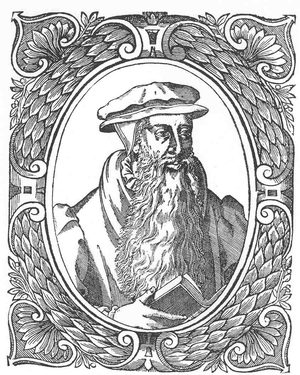

John Knox was a Scottish priest turned Protestant preacher who led the Reformation in Scotland in 1559–60 and became minister of St Giles' in Edinburgh. His tradition honors him as the founder of the Church of Scotland and the Presbyterian churches; Catholics remember the abolition of the Mass under his preaching, and Anglicans know him through the "Black Rubric" and the queen who never forgave his First Blast.
| Lived | c. 1514 (some sources say between 1505 and 1515), probably at Haddington, East Lothian, to 24 November 1572, Edinburgh |
|---|---|
| Church | Catholic priest, ordained in Scotland; Protestant preacher from 1547; minister of Edinburgh from 1559 |
| Role | Royal chaplain to Edward VI (1551); pastor of the English exiles at Frankfurt (1554–55); minister of St Giles', Edinburgh, from 1559 |
| Influenced by | George Wishart, whom he accompanied in 1546; John Calvin, with whom he studied at Geneva |
| Influenced | The Church of Scotland and the Presbyterian churches |
| Writings | First Blast of the Trumpet against the Monstrous Regiment of Women (1558); Scots Confession (1560, with five other ministers); First Book of Discipline (1560); his Geneva service book, the basis of the Book of Common Order; History of the Reformation in Scotland (written 1559–66) |
| Honored | The PC(USA) marked the 500th anniversary of his birth on 26 October 2014; he died on 24 November 1572 |
Life
Knox was born at or near Haddington, and the year is uncertain: c. 1514 is now usual. He was ordained priest and worked as a notary. In 1546 he accompanied the preacher George Wishart, whom Cardinal David Beaton had arrested in January; Wishart was tried for heresy and burned at St Andrews on 1 March 1546. Beaton was murdered there in May, and Knox, who had no part in the killing, later approved it. He joined the garrison holding St Andrews castle and was called to preach there. When a French fleet forced the castle to surrender on 31 July 1547, Knox was sent to the French galleys, where he spent about nineteen months; he was freed in February 1549.
In England he preached at Berwick and Newcastle and in 1551 became a royal chaplain to Edward VI. In October 1552 he declined the bishopric of Rochester. After Mary Tudor became queen (July 1553) he left for the Continent, led the English exiles at Frankfurt from September 1554, was forced out in a dispute over the Prayer Book in March 1555, and spent much of the next years at Geneva. There, in 1558, he published The First Blast of the Trumpet against the Monstrous Regiment of Women. He landed at Leith on 2 May 1559, was chosen minister of Edinburgh, and in August 1560 the Scottish Parliament approved the Scots Confession, abolished papal jurisdiction and banned the Mass. Mary, Queen of Scots, returned from France on 19 August 1561 and met Knox in a series of interviews. He married a second time in 1564, wrote his History and died on 24 November 1572.
What he taught
Knox's teaching is chiefly found in the Scots Confession (1560), which he drafted with five other ministers named John in four days. It teaches election "of mere mercy" in Christ (ch. 8; predestination) and says that general councils, being made of men, have "manifestly erred" (ch. 20; Scripture alone). It names three marks of the true church: "the true preaching of the word of God," the right administration of the sacraments, and church discipline (ch. 18). Of the Lord's Supper it holds that Christ's body is in heaven and that believers feed on it through the Holy Spirit (ch. 21). Baptism "appertaineth as well to the infants of the faithful" (ch. 23; infant baptism), and the sacraments are administered only by those appointed to preach (ch. 22). The magistrate's duty includes "the conservation and purgation of the Religion" (ch. 24). Knox held that the Mass is idolatry (David F. Wright).
The First Book of Discipline (1560) planned ten districts under superintendents, which later became presbyteries, a national system of poor relief and schools under the church; the nobility did not endorse it. On resistance, Knox told Mary that subjects "are not bound to the religion of their princes, although they are commanded to give them obedience," and that if princes exceed their bounds "they may be resisted, even by power" (his account of 26 August 1561). In the First Blast he argued against rule by women: "regiment" there means rule, and he aimed at queens, not at women in general (David F. Wright).
What historians say
Jane Dawson, in John Knox (Yale, 2015), challenges the older portrait of a narrow, harsh and parochial figure, presenting him as an international reformer shaped by several exiles; a reviewer, Calum Wright, found that her context does little to dispel the view that the First Blast was misogynist. David F. Wright called the modern caricature "greatly exaggerated" but found "a bit of substance" in the charges of harshness. R. Tudur Jones judged the First Blast "a monumental political mistake" and Knox "narrow-minded and intolerant," yet a man of "immense courage." The 1913 Catholic Encyclopedia names "the ferocity and unrestrained violence of his public utterances," while granting that he "died, as he had lived, a poor man."
Knox's own History of the Reformation in Scotland (first printed in full in 1644) is the main source for the period and the only record of his interviews with Mary. The Dictionary of National Biography notes that these exist only in his version, and Andrew Lang called the second book an apologia for Knox's party that needs checking against other sources. Others, such as Hume Brown, find the writer's good faith convincing. The Catholic Encyclopedia criticizes his approval of Beaton's murder; Wright calls him "bolder than Calvin" in advocating resistance to unjust rulers. Later Scottish episodes appear in the Reformed record.
How the churches see Knox
- Catholic:
The Catholic Church has made no statement about Knox. In 1560 the Scottish Parliament abolished papal jurisdiction and the Mass; Mary, Queen of Scots, a Catholic, refused to ratify the settlement. The Catholic Encyclopedia (1913) is critical of him and of his dealings with Mary, noting that he reported the interviews at length but gave few of her replies. On the 450th anniversary (2010), Archbishop Mario Conti of Glasgow said that as a Catholic he could hardly "celebrate" the Reformation but that it was "a decisive moment in our nation's story," and called for "the unity which Christ himself willed."
- Orthodox:
The Orthodox Church has made no statement about Knox. On the points where his church differs from Orthodoxy, see Orthodox and Presbyterian teaching compared.
- Lutheran:
The Lutheran confessions do not mention Knox. They teach that Christ's body and blood are present "under the bread and wine" (Small Catechism), whereas the Scots Confession (ch. 21) places Christ's body in heaven and teaches that believers feed on it through the Holy Spirit; the Formula of Concord (1577) rejects the Reformed teaching on the Supper (compared).
- Reformed:
The Church of Scotland's Articles Declaratory (1921) describe it as "in historical continuity with the Church of Scotland which was reformed in 1560"; the Scots Confession, approved by Parliament in 1560, remains among its key documents, though the Westminster Confession is now its principal subordinate standard (Church of Scotland). The Scots Confession is also in the PC(USA) Book of Confessions. The PC(USA) honored Knox's birth in 2014, and its worship resources include his 1564 liturgy and prayers drawn from the Scots Confession. Its writer Charles Wiley calls him "a fierce and fiery reformer" whose temperament can make Presbyterians uneasy but whose influence is undeniable.
- Anglican:
The Black Rubric belongs to Anglican history. In 1552 Knox and others argued before the Privy Council against kneeling at Communion; Archbishop Cranmer objected to the pressure, and the Council added a declaration that kneeling implied no adoration of the bread and wine. It was printed on a separate leaf in black ink, left out in 1559 and restored in 1662 in words that deny adoration of any "Corporal Presence of Christ's natural Flesh and Blood." Elizabeth I took offense at the First Blast, although it was aimed at Mary Tudor and other queens: in 1559 she refused him passage through England, and Knox wrote to William Cecil that he had not meant to offend her. She also rejected Calvin's dedication of his Isaiah commentary, because of the connection she saw.
- Methodist:
The Methodist churches have made no statement about Knox. The Scots Confession teaches election in Christ (ch. 8); Methodists, following Wesley, hold that Christ died for all and so differ from Reformed teaching on this (compared).
- Baptist:
The Baptist churches have made no statement about Knox. The Scots Confession baptizes the infants of the faithful (ch. 23), whereas the Second London Confession (1677; 1689) reserves baptism for those who "actually profess" repentance and faith (29.2); see Presbyterian and Baptist teaching compared.
Sources
- Catholic Encyclopedia (1913), "John Knox" (mirror at heiligenlexikon.de) dates, judgment, Mary interviews
- R. Tudur Jones, "Preacher of Revolution," Christian History Institute
- David F. Wright interview, "Prophet Without Honor?" Christian History Institute
- Knox, interview with Queen Mary, 26 August 1561 (History of the Reformation in Scotland)
- Calum Wright, review of Jane Dawson, John Knox (Yale, 2015), Reviews in History no. 1888
- Dictionary of National Biography, vol. 31, "Knox, John" (Wikisource) interviews known only from Knox's account
- Andrew Lang, John Knox and the Reformation (Project Gutenberg)
- Scots Confession (1560), chs. 8, 18, 20-24
- The Scots Confession, historical note (creeds.net)
- EBSCO Research Starters, "John Knox" early life, First Book of Discipline
- Journal of Ecclesiastical History, "Two John Knoxes: England, Scotland and the 1558 Tracts"
- Church Society, "Formulary Friday: the Black Rubric"
- St Giles' Cathedral, "John Knox"
- PC(USA), "John Knox 500" (2014)
- Archbishop Conti on the Scottish Reformation, Independent Catholic News (3 November 2010)
- Small Catechism (Book of Concord)
- Solid Declaration of the Formula of Concord (Book of Concord)
- Second London Baptist Confession (1689), ch. 29
- Knoxbezaicones.jpg, Wikimedia Commons (public domain)
- Knox and the First Blast, Presbyterian Historical Society Elizabeth's refusal of passage; Calvin's dedication
- Knox's letter to Cecil, July 1559 (First Blast appendix)
- Articles Declaratory of the Constitution of the Church of Scotland (1921)
- PC(USA), Book of Confessions