William Wilberforce 1759–1833
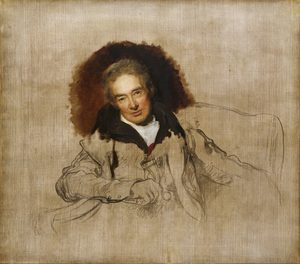

William Wilberforce was an English member of Parliament and evangelical Anglican who led the parliamentary campaign that ended the British slave trade in 1807 and died days after hearing that a bill ending slavery in the British Empire would pass. Historians and the churches remember him for different things: his faith, his legislative persistence, and the limits of the gradual course he followed.
| Lived | 24 August 1759, Hull, to 29 July 1833, London |
|---|---|
| Church | Church of England; a layman and evangelical |
| Role | Member of Parliament from 1780 to 1825 (Hull, then Yorkshire); leader of the parliamentary campaign against the slave trade; member of the Clapham circle |
| Influenced by | Isaac Milner, John Newton, Philip Doddridge's Rise and Progress of Religion in the Soul, William Pitt, Thomas Clarkson |
| Influenced | Thomas Fowell Buxton, who led the Anti-Slavery Society in the Commons from 1823; the evangelical societies of the Clapham circle |
| Writings | A Practical View of the Prevailing Religious System of Professed Christians (1797); Appeal to the Religion, Justice, and Humanity of the Inhabitants of the British Empire on behalf of the Negro Slaves in the West Indies (1823) |
| Honored | 30 July in the Church of England calendar (Lesser Festival, with Olaudah Equiano and Thomas Clarkson) and in the Episcopal Church calendar |
Life
Wilberforce was born in Hull on 24 August 1759 into a family of merchants. After his father died in 1768 he lived for a time with an uncle at Wimbledon, where an aunt drew him toward Methodism until his mother brought him back to Hull; he went on to Pocklington school and in October 1776 to St. John's College, Cambridge. He was elected for Hull in 1780, at twenty-one. In 1784–85 he traveled on the Continent with his friend Isaac Milner; they read Doddridge's Rise and Progress of Religion in the Soul and then the Greek New Testament, and the result was the evangelical conversion that he dated to 1785 (the Episcopal commemoration text gives 1784). John Newton, himself a former slave-trader, became his spiritual adviser.
In 1787 Thomas Clarkson sought him out, and Wilberforce agreed to take the cause of ending the slave trade into Parliament; a committee, chiefly of Quakers, had formed on 22 May. He moved for abolition on 12 May 1789; a later motion was lost by 61 votes to 53 (1793). The bill passed its second reading in the Commons by 283 to 16 on 23 February 1807 and received royal assent on 25 March. In 1787 he also won the support of bishops for a royal proclamation against vice (1 June) and a society to enforce it. From 1792 he lived in Henry Thornton's house at Clapham, and after his marriage in 1797 nearby, as the most prominent man in the circle called the Clapham Sect. He published A Practical View in 1797, helped found the Church Missionary Society (first discussed at his house in November 1798) and the Bible Society (1803), and in 1823 issued his Appeal, after which the Anti-Slavery Society was formed. He left the Commons in 1825 and died in London on 29 July 1833. The Slavery Abolition Act received royal assent on 28 August 1833. He was buried in Westminster Abbey.
What he taught
Wilberforce remained an Anglican layman and wrote as one. A Practical View is addressed, as its title says, to the higher and middle classes, and sets "real Christianity" against the religion of what he calls "the bulk of nominal Christians." Its chapters treat the importance of Christianity, the corruption of human nature, the defects of the common religious system in what it makes of Christ and the Holy Spirit, and the strictness of practical Christianity. He gave his time to the missionary and Bible societies and to the reformation of public manners, and he held that such duties belonged inside public life.
On slavery he argued as a Christian and as a legislator. His 1823 Appeal dwelt on the moral and spiritual degradation of the enslaved and presented emancipation as a national duty to God (summarized by Spartacus Educational). In practice he took a gradual line: when Thomas Fowell Buxton moved against slavery in 1823 and Canning answered with resolutions to improve the system, Wilberforce persuaded his followers to accept them (Dictionary of National Biography, 1900). He also carried a bill to amend the criminal law through the Commons (1786), helped start a Society for Bettering the Condition of the Poor (1796) and, per the Episcopal commemoration text, promoted missions and popular education.
What historians say
Debate has centered on four questions. First, credit. The Dictionary of National Biography (1885) noted that some admirers tried to raise his merit by lowering that of his allies, and Ellen Gibson Wilson, Clarkson's biographer, wrote that the Wilberforces' five-volume Life (1838) "vindicated" Clarkson's fear that he would be forced to reply.
Second, causes. In Capitalism and Slavery (1944) Eric Williams argued that abolition followed the decline of the West Indian plantations; in Econocide (1977) Seymour Drescher argued that Parliament acted when the trade and slavery were still profitable, and credited popular mobilization (UNC Press).
Third, the enslaved themselves. The History of Parliament notes that the Christmas Rebellion or Baptist War in Jamaica (1831–32), in which around 60,000 enslaved people rose, was followed by reports of its brutal suppression reaching the Commons, where immediate emancipation was urged to avoid further bloodshed. Elizabeth Heyrick's Immediate, Not Gradual Abolition (1824) attacked the "slow, cautious, accommodating measures" of leaders such as Wilberforce. The Act that passed gave £20 million to slave owners, nothing to the formerly enslaved, and bound adults to unpaid "apprenticeship" for up to six years; it ended in the British West Indies on 1 August 1838. Wilberforce did not live to see it become law.
Fourth, his record at home. He supported the suspension of habeas corpus (1795) and the Combination Acts of 1799–1800, which made trade unions illegal, and William Cobbett accused him of hypocrisy for campaigning for slaves abroad while British workers lived in desperate conditions. He wrote that for women "to go from house to house stirring up petitions" seemed "unsuited to the female character as delineated in Scripture"; William Hague says he could not adjust to women in politics. The Dictionary of National Biography answers that he was respected by Tories, Whigs and radicals alike. On the churches' own part in slavery, see the Anglican record and the Church and slavery.
How the churches see Wilberforce
- Catholic:
No Catholic canonization or calendar entry for Wilberforce was found. The Catholic Church's official act on the cause he served is Gregory XVI's In supremo apostolatus (1839), which forbade any ecclesiastic or lay person to defend the trade in Black people as permissible; it does not name him. On Catholic relief he changed his mind: the Dictionary of National Biography says he was doubtful in 1808 but defended the Catholic claims in a speech on 9 March 1813, and offended many religious friends by doing so. The Episcopal commemoration text also records that he supported Catholic emancipation.
- Orthodox:
No Orthodox calendar or synodal text that names Wilberforce was found.
- Lutheran:
No Lutheran confession, church body or calendar that names Wilberforce was found.
- Reformed:
No Reformed confession or communion statement that names Wilberforce was found. He was an Anglican, not a member of a Reformed church.
- Anglican:
The Church of England's Common Worship calendar lists 30 July as a Lesser Festival for "William Wilberforce, Social Reformer, Olaudah Equiano and Thomas Clarkson, Anti-Slavery Campaigners, 1833, 1797 and 1846"; observance of Lesser Festivals is optional. The Episcopal Church's Lesser Feasts and Fasts (2024) lists "William Wilberforce, Social Reformer, 1833" on 30 July, with a collect that asks God for grace "to defend the poor, and maintain the cause of those who have no helper" and a biography that says he supported parliamentary reform and Catholic emancipation.
- Methodist:
John Wesley wrote to Wilberforce from Balam on 24 February 1791, days before his own death: "Unless the divine power has raised you up to be as Athanasius contra mundum, I see not how you can go through your glorious enterprise." He called the slave trade "that execrable villainy" and urged him to "go on, in the name of God." The Episcopal commemoration text calls it one of the last letters Wesley wrote. The letter is cited in the Methodist record chapter, Retreating from the rules against slaveholding. No Methodist calendar entry for Wilberforce was found, so the link rests on the letter.
- Baptist:
No Baptist confession or union statement that names Wilberforce was found. Baptist memory of the campaign centers on William Knibb of the Baptist Missionary Society: after the 1831–32 uprising he was arrested and accused of inciting rebellion, then toured England campaigning against slavery; after the 1833 Act he kept speaking against apprenticeship, pledging "never to rest satisfied" (BMS World Mission). The Baptist record adds that Baptists in England and Jamaica were abolitionists, while some leading American Baptist ministers defended slavery (Defending slavery from Scripture).
Sources
- Dictionary of National Biography, 1885–1900, "Wilberforce, William" (Wikisource) life, Newton, the proclamation society, CMS, 1807 act, Catholic claims, 1823 appeal, burial
- Wilberforce, A Practical View (1797), contents and text (Internet Archive)
- The History of Parliament, "1833 Slavery Abolition Act: The Long Road to Emancipation in the British West Indies" (2024)
- Wesley, letter to William Wilberforce, 24 February 1791 (Wesley Center Online, Wesley's Letters, 1791)
- Lesser Feasts and Fasts 2024, Episcopal Church (30 July, William Wilberforce)
- Common Worship: Festivals, Lesser Festivals (William Wilberforce, Olaudah Equiano and Thomas Clarkson)
- Calendar of saints (Church of England), listing of the Common Worship calendar entry and level for 30 July
- Spartacus Educational, "William Wilberforce" Heyrick, Cobbett, Combination Acts, the 1823 Appeal; quotes from Hague and Wilson
- UNC Press, Drescher, Econocide: British Slavery in the Era of Abolition
- Capitalism and Slavery (Eric Williams, 1944)
- BMS World Mission, "Jamaica" (William Knibb)
- Gregory XVI, In supremo apostolatus (1839)
- Thomas Lawrence portrait, Wikimedia Commons (public domain)